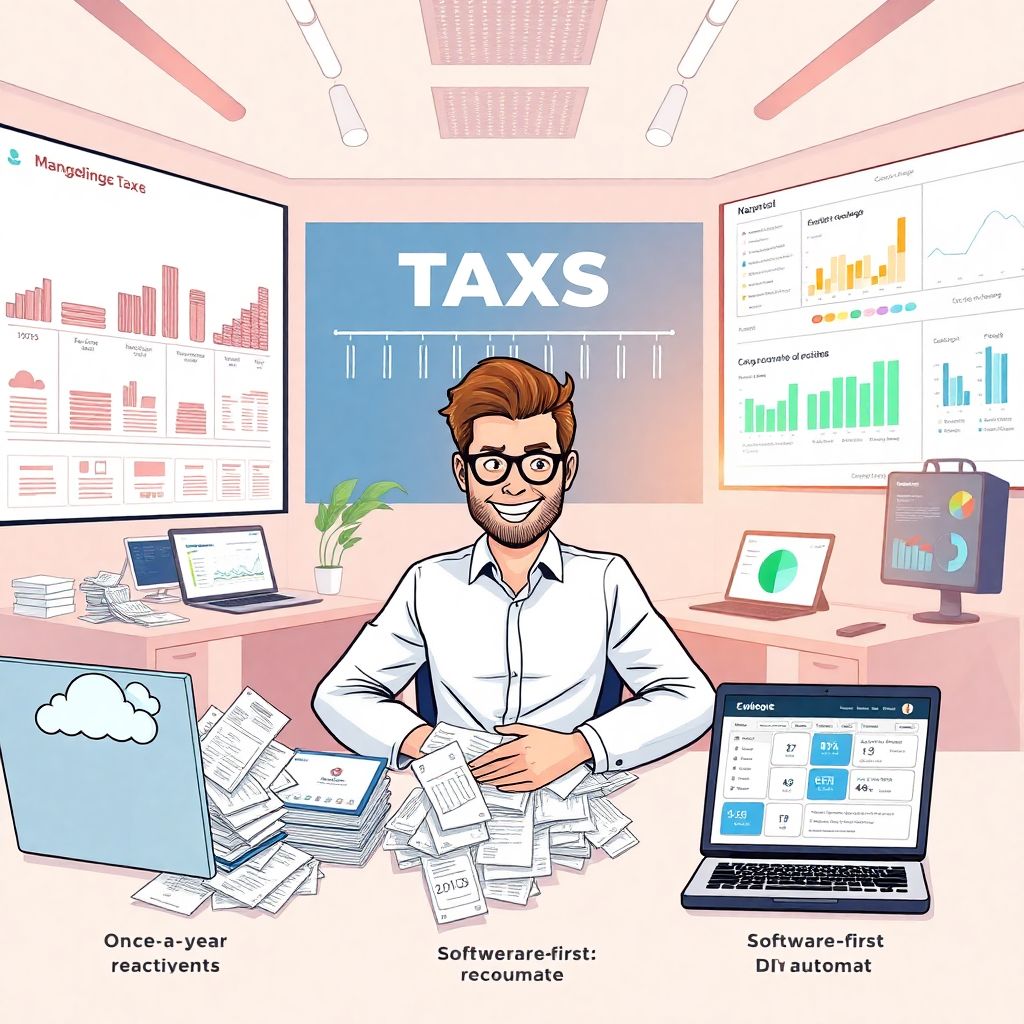
Tax season used to be something you “survived.” In 2025, smart owners treat it more like a product launch: planned, measured, and optimized. That’s essentially what “maximizing small business tax deductions” is about—turning a once‑a‑year headache into a strategic habit that quietly boosts your profit margin.
Below — an overview of how to think about small business tax deductions today, with a bit of history, some tech talk, and practical guidance you can actually use.
—
From Ledgers to Algorithms: How We Got Here
A quick historical detour
Not so long ago, tax planning for a small business meant a shoebox of receipts and an overworked accountant with a calculator. In the 1950s–1980s, even in the U.S., most small firms relied on manual bookkeeping. Deductions mainly revolved around obvious costs: rent, wages, utilities, some equipment.
Computers in the 1990s brought basic accounting software. That was the first big shift: consistent categorization of expenses made it much easier to claim small business tax deductions without missing the basics. But the real game‑changer came in the 2010s and 2020s with:
– Cloud accounting platforms
– Automated bank feeds
– Machine‑learning‑driven expense categorization
By the early 2020s, algorithms were quietly suggesting deductible items you might have missed. Remote work blurred the line between home and office, which forced tax rules to adapt and opened up new kinds of write‑offs (home office, distributed teams, digital tools, etc.).
Now, in 2025, you’re operating in a world where:
– Most transactions are digital
– Tax software integrates with your bank, payroll, and invoicing
– Regulators are using analytics and AI to spot non‑compliance just as fast as you’re using them to find deductions
That mix of automation and scrutiny is exactly why you need a clear strategy, not just “hope the software catches it.”
—
What Counts as a Deduction Today (Beyond the Obvious)
The modern scope of small business tax deductions
“Ordinary and necessary” is still the core principle in most tax codes, but what’s considered “ordinary” in 2025 is very different from 1995. Today’s best tax deductions for small business owners usually fall into several familiar buckets, just with more digital flavor:
– Operating costs: rent (or co‑working), utilities, software subscriptions, hosting, communication tools
– People costs: salaries, contractor fees, benefits, training, recruitment
– Growth costs: marketing, advertising, conferences, online courses, professional memberships
– Asset costs: equipment, computers, servers, vehicles, sometimes even specialized AI hardware
– Mixed‑use costs: home office, internet, mobile phone, travel that mixes business and personal time
A lot of owners still miss the newer or less intuitive items — like the deductible portion of cloud tools, cybersecurity services, cross‑border remote staff costs, and structured R&D work.
So the real question isn’t “what can I deduct?” but “how do I set up my business to consistently capture all of this without creating a compliance mess?”
—
Different Approaches to Maximizing Deductions
Three main mindsets
You’ll see three broad approaches in the wild:
1. Reactive “once‑a‑year” approach
2. Software‑centric / DIY automation approach
3. Strategic planning with professionals
They’re all “valid,” but they’re not equally effective if your goal is truly to maximize small business tax deductions in a sustainable way.
—
1. The reactive “once-a-year” method
This is the classic: you collect whatever documents you can find in March or April, throw them at an accountant or tax app, and hope for the best.
Long version: it used to work reasonably well when businesses were simpler and regulators less data‑driven. Today, it’s like trying to optimize your marketing by looking at one report once a year.
Short version: you leave money on the table.
Pros:
– Minimal time during the year
– Low mental load — you “deal with taxes later”
Cons:
– Lots of missed deductions (no proper tracking or categorization)
– Higher audit risk if you estimate or rush
– No real cash‑flow planning — surprises at filing time
– Hard to support deductions if you’re ever asked for documentation
This approach answers “how to maximize small business tax write offs” with “you probably don’t.”
—
2. Software‑first / DIY automation
Here you lean on:
– Cloud accounting tools
– Linked bank feeds
– Receipt‑scanning apps
– Integrated tax modules or plugins
The software auto‑categorizes transactions and nudges you about potential deductions. You log in occasionally and correct obvious mistakes.
Pros:
– Better capture of routine expenses
– Real‑time visibility into profits and tax exposure
– Lower bookkeeping costs than fully manual routes
– Easy exports and standardized reports for your tax pro
Cons:
– Algorithms misclassify edge cases (e.g. mixed personal–business expenses)
– Software doesn’t know your long‑term goals, only the rules it was fed
– You might still miss niche or advanced small business tax deduction strategies (like timing asset purchases, credits, or special industry rules)
This is a huge upgrade over the reactive method, but it’s still “good housekeeping” rather than strategic design.
—
3. Strategic planning with professionals
Here you combine tech automation with ongoing advice — often from firms that offer specialized small business tax planning services, not just generic filing.
That typically looks like:
– Quarterly or semi‑annual check‑ins
– Projections of profit, tax, and cash‑flow
– Scenario modeling: “What if I hire vs. use contractors? Lease vs. buy equipment?”
– Structure optimization (sole proprietor vs. LLC vs. corporation, and subsidiaries when relevant)
Pros:
– Higher chance of capturing both standard and advanced deductions
– Better alignment between deductions and your growth strategy
– Fewer “surprises” at filing time
– More robust documentation and defensible positions
Cons:
– Higher cost upfront
– Requires you to be reasonably organized (data, receipts, systems)
– Quality varies wildly between providers
In practice, the most effective path is often “software + professional guidance,” not one or the other.
—
Technology: What Helps and What Hurts
The major tools in 2025
Let’s zoom in specifically on the technologies involved in maximizing small business tax deductions.
Common tools include:
– Cloud accounting platforms (QuickBooks, Xero, and newer AI‑heavy competitors)
– Expense‑tracking apps with receipt OCR and auto‑rules
– Mileage and travel trackers that integrate with calendars and GPS
– Scenario‑planning or forecasting software, sometimes built into your accounting stack
These tools make the everyday work of tracking deductions much lighter. But they’re not magic.
—
Pros and cons of today’s tax tech
Pros of modern tax/finance tech:
– Automation of the boring parts
Regular subscriptions, utilities, recurring vendor payments — all neatly categorized for deduction.
– Higher data quality
Fewer typos, missing invoices, and forgotten expenses.
– Better collaboration
Your bookkeeper, tax advisor, and possibly your CFO‑for‑hire can all work from the same, up‑to‑date system.
– Faster what‑ifs
“Should I buy that new machine this year?” becomes a 10‑minute check, not a half‑day spreadsheet marathon.
Cons and risks:
– Over‑reliance on defaults
If you never customize rules, the software might continuously miscategorize certain expenses — sometimes in ways that reduce deductions.
– Black‑box assumptions
Some AI‑driven tools apply generic small business tax deduction strategies that may not reflect the nuances of your jurisdiction, industry, or structure.
– Complacency
Owners begin to assume, “The system handles it,” and stop thinking critically about whether certain costs could be structured more efficiently.
In short: technology is a leverage tool, not a substitute for understanding the game you’re playing.
—
Comparing Practical Strategies Side by Side
Everyday habits vs. structural moves
Think about deduction strategies on two levels:
1. Micro (habits and tracking) — what you do weekly and monthly
2. Macro (design and timing) — what you do annually or when something big changes
Micro strategies might include:
– Logging all business travel and client meetings the same day they happen
– Using separate business bank and credit card accounts
– Tagging expenses by project or revenue stream
Macro strategies might include:
– Choosing (or changing) your business entity type
– Deciding when to buy or dispose of major assets
– Designing compensation (salary, dividends, bonuses, benefits, stock options where appropriate)
– Planning retirement and insurance vehicles that are partially or fully deductible
The micro level is where software shines. The macro level is where advice and deliberate planning matter most.
For most small firms in 2025, consistently combining both levels is what truly answers how to maximize small business tax write offs without either under‑claiming or over‑reaching.
—
Practical Recommendations: Building Your Own Playbook
Foundational moves every owner should make
Regardless of industry, a few practices are almost universally useful if you want to get serious about small business tax deductions:
– Separate everything
Use a dedicated business bank account and card. This one step alone reduces missed deductions and bookkeeping chaos.
– Standardize how you pay for things
Fewer payment channels (e.g. always using the same business card or system) make it easier to track and justify deductions.
– Capture evidence in real time
Snap receipts, log miles, note client meetings. Five seconds now beats half an hour of reconstruction three months later.
– Review categories monthly
Quickly scan your expenses and correct odd classifications. This keeps your data clean and deductions more accurate.
These are unglamorous, but they’re the bedrock on which any advanced small business tax deduction strategies will rest.
—
When to bring in professional help
You don’t need a full‑time tax department, but there are clear signals that you’ve outgrown pure DIY and should consider small business tax planning services:
– Revenue is growing fast or became erratic (seasonal, project‑based, international clients).
– You’ve hired your first employees or are scaling beyond contractors.
– You’re investing in significant assets, R&D, or intellectual property.
– You operate in more than one tax jurisdiction (states, provinces, or countries).
A good advisor will not just process your numbers. They’ll help you think in terms of after‑tax outcomes: “Given where you want this business to be in 3–5 years, which deductions and structures help you most — and which look good now but hurt you later?”
—
Choosing Your Tech and Service Stack Wisely
How to pick tools that actually help
When choosing software for managing and maximizing deductions, don’t chase features for their own sake. Focus on how the tool fits your workflow.
Look for:
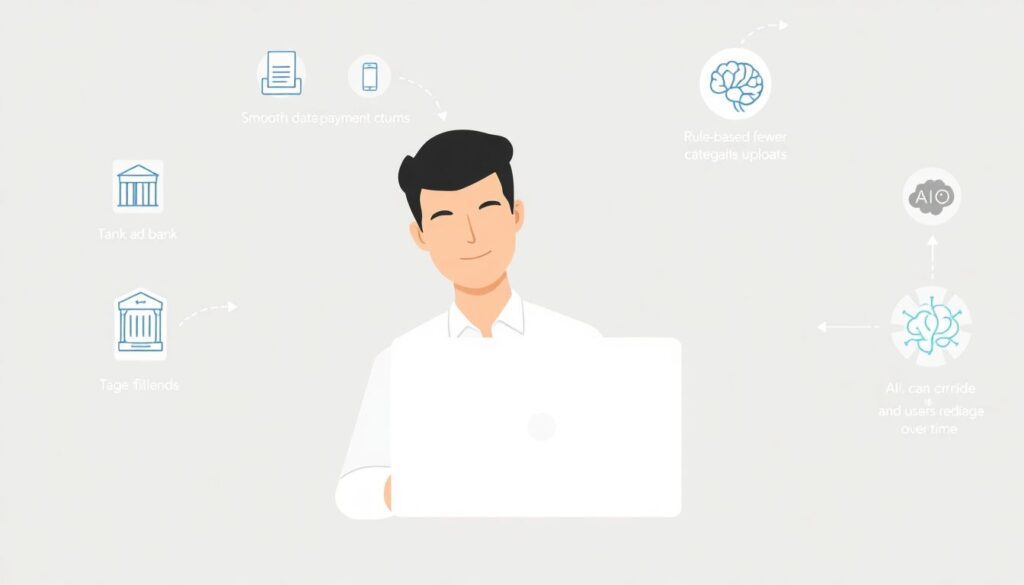
– Strong bank and payment integrations — fewer manual uploads
– Rule‑based and AI‑based categorization — with the ability to override and learn from your corrections
– Easy collaboration — your accountant or advisor can get read/write access without drama
– Clear audit trail — you can reconstruct where numbers came from if needed
A quick reality check: any tool promising “full automation, no effort” is overselling. You’re aiming for “90% automated, 10% thoughtful review.”
—
How to evaluate planning and tax services
Not all professionals are created equal. When vetting small business tax planning services, ask concrete questions:
– “How often do you recommend we review my situation — annually, quarterly?”
– “What kinds of clients do you typically work with? Any in my industry?”
– “Can you give examples of legal deduction or structure changes you’ve implemented that had a big impact?”
– “How do you coordinate with the software I already use?”
You’re looking for someone who talks in specifics and scenarios, not only in generic slogans about “saving you money.”
—
Emerging Trends in 2025 That Affect Deductions
Regulatory and economic shifts
Several 2025 trends shape what’s realistic — and smart — when you’re trying to find the best tax deductions for small business owners:
– Tighter digital reporting
More jurisdictions are moving toward real‑time or near real‑time digital reporting, which makes “creative” reconstruction of records after the fact much riskier.
– AI on both sides
Tax authorities increasingly use analytics to spot anomalous deduction patterns, while your software uses similar tools to surface missing deductions. The arms race rewards consistency and documentation more than ever.
– Remote and hybrid work normalization
Rules around home office, cross‑border employees, and digital nomads are maturing. There can be new opportunities (e.g. clearly defined home‑office deductions), but also more precise limitations.
– Green and innovation incentives
Governments under pressure to boost productivity and climate resilience are extending or tweaking credits for R&D, energy‑efficient upgrades, and certain sustainability projects. Structuring eligible activities properly can unlock significant extra deductions and credits.
—
Where smart owners are heading
Forward‑looking owners in 2025 are doing a few things differently from the pack:
– Treating tax as an ongoing design problem, not a yearly chore
– Building “deductibility” into decisions upfront (e.g., choosing tools, structuring roles, planning investments)
– Using analytics dashboards that highlight after‑tax profit, not just topline revenue
– Negotiating with advisors for regular planning calls instead of a single annual filing service
In other words, they integrate tax thinking into strategy, rather than bolting it on at the end.
—
Bringing It All Together

Maximizing small business tax deductions in 2025 isn’t about memorizing obscure rules. It’s about setting up a system where:
– Your tools reliably capture the day‑to‑day data
– Your habits keep that data clean and documented
– Your advisors help you design the bigger moves — structure, timing, incentives
If you get those three layers working together, you don’t need to chase every one‑off “hack.” Instead, your default way of running the business naturally leads to better after‑tax outcomes year after year.