Planning a car replacement is essentially a medium‑term financial engineering task: you are matching a future asset purchase to today’s cash flow, risks and constraints. Instead of asking vaguely “how much should I budget for a new car”, it’s more productive to break the process into clear stages, use numbers, and treat the decision like a mini‑project with defined inputs, outputs and checkpoints. Ниже — структурированный подход, который можно повторить в любых условиях, от первой дешёвой машины до замены корпоративного авто.
Necessary tools and data for accurate budgeting
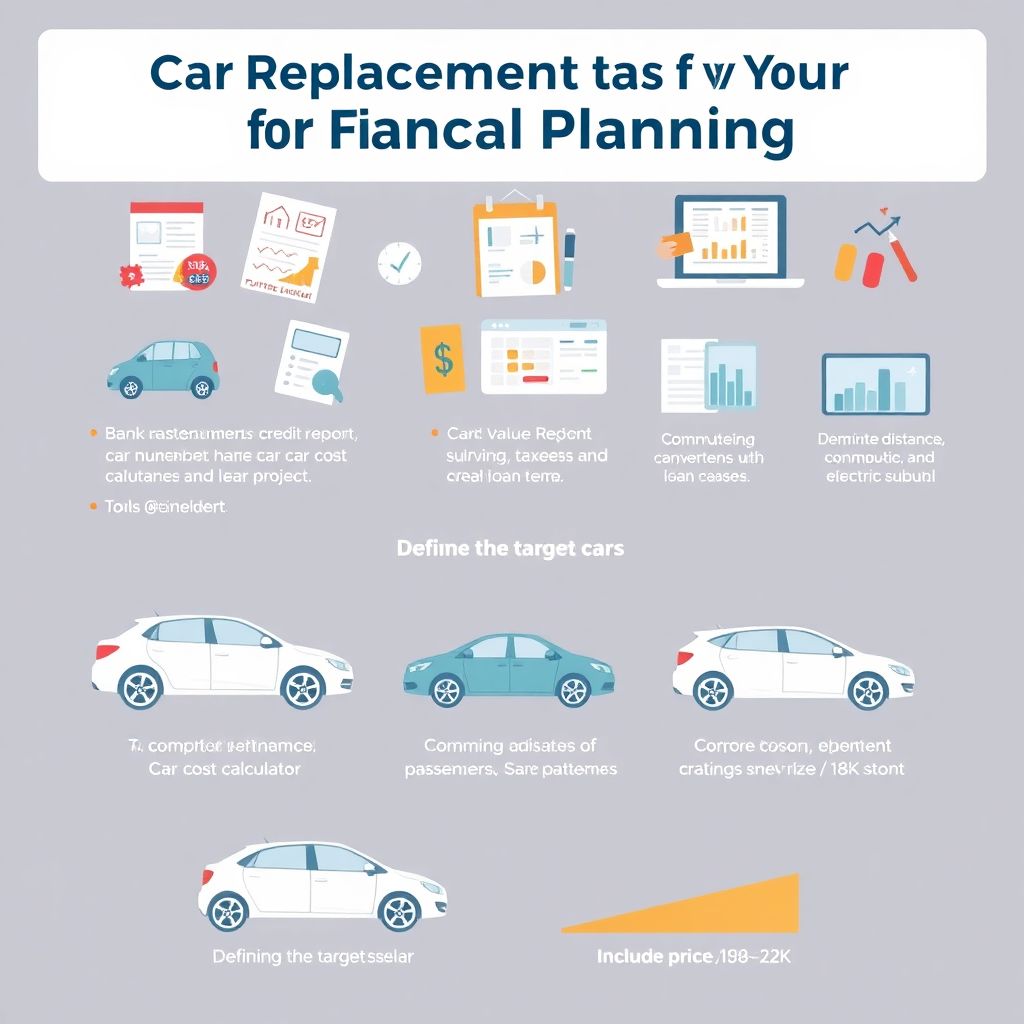
Before you even look at sale listings, you need a basic toolkit. At minimum, this includes: access to a reliable car replacement cost calculator, your last 3–6 months of bank statements, a current credit report, and an estimate of your existing car’s resale or trade‑in value. The calculator helps formalize assumptions about depreciation, taxes, registration fees and financing costs instead of guessing. Statements reveal your real disposable income and spending leaks. A credit report constrains or expands your affordable car finance options, because interest rates and approval limits directly impact your total cost of ownership. Many people skip this “data acquisition” phase, but in practice it is where most unrealistic budgets are born.
Defining the target vehicle and use‑case
Budgeting is impossible if the target is fuzzy. You need a working specification: segment (compact, SUV, EV), usage profile (commute distance, cargo, passengers), and service life (how many years you intend to keep the car). For example, if you commute 80 km daily, fuel economy and drivetrain reliability dominate, whereas in a dense city with short trips and expensive parking, vehicle size and insurance class may matter more. Define a price band, not a single price: e.g., “replacement between $18,000 and $22,000, 4–6 years old, under 80,000 km, low insurance group”. This narrows the search, and any serious how to budget for a car replacement framework will fail without this explicit scope statement. Think of it like drafting technical requirements before procuring equipment.
Estimating the full cost of ownership, not just sticker price
The direct price is only a fraction of what you will pay across the life of the car. A good car replacement cost calculator forces you to integrate purchase price, sales tax, registration, insurance, fuel or electricity, scheduled maintenance, probable repairs and depreciation into one model. For instance, a cheap high‑mileage diesel might look attractive upfront, but once you input higher insurance, potential emissions system repairs and poor urban fuel efficiency, the five‑year cost of ownership can exceed that of a slightly more expensive hybrid. From a financial modeling perspective, you should construct a monthly “lifecycle cost” number that includes both cash outflows (payments, insurance, fuel) and non‑cash but real costs like depreciation. This is the variable you need to reconcile with your net income.
Case study: mid‑income commuter replacing a failing hatchback
Consider Alex, who drives 40 km round‑trip daily and owns a 10‑year‑old hatchback that recently generated a repair quote of $2,500 for transmission issues. Emotionally, Alex wants a new compact SUV at around $30,000, but the numbers challenge that impulse. After extracting bank transactions, Alex finds an average net income of $3,400 per month and total fixed obligations of $2,200, leaving $1,200 for variable spending and savings. Using a conservative policy that total vehicle costs should not exceed 15% of net income, Alex has only about $510 per month to allocate. Plugging a $30,000 SUV with 8% interest over 72 months into a calculator, plus insurance and fuel, produces an all‑in cost near $780 per month. That fails the constraint. By iterating with the calculator and shifting the requirement to a 4‑year‑old sedan around $19,000, Alex finds a configuration with an estimated $480 monthly lifecycle cost. The case illustrates how rigorous budgeting frequently leads to a more modest but sustainable car choice.
Step‑by‑step process: from current finances to target budget
A clear sequence helps turn scattered numbers into a concrete car replacement savings plan. You can use the following algorithmic steps:
1. Capture your baseline: calculate average monthly net income and categorize the last 3–6 months of expenses into fixed (rent, utilities, loans) and variable (food, entertainment, discretionary shopping).
2. Define a safe vehicle cost ratio: many planners recommend 10–15% of net income for all vehicle expenses combined; pick a ceiling that still leaves room for emergency savings.
3. Use a calculator to back‑solve: input different vehicle prices, down payments, and loan terms into a car replacement cost calculator until the projected monthly lifecycle cost (payment + insurance + fuel + maintenance) fits under your chosen ratio.
4. Translate the gap into a savings goal: if you are not buying for 12–24 months, back‑calculate the monthly amount needed for the down payment and buffer fund.
5. Implement controls: automate transfers to a dedicated savings account and set calendar reminders to review assumptions every quarter.
By treating these steps as a deterministic workflow, you reduce emotional bias and make the budget a function of your financial constraints, not the other way around.
Integrating income variability and risk buffers
Many people have irregular cash flow—bonuses, freelance income, or seasonal work. For them, budgeting for a car replacement must incorporate volatility management techniques. Instead of assuming the top of your earnings range, construct a conservative scenario using your 6‑ or 12‑month average net income excluding bonuses. Then set your vehicle cost ratio based on that lower, more stable baseline. Additionally, incorporate a risk buffer by building an emergency fund of at least 3 months of total expenses before committing to long‑term car payments. Technically, this reduces default risk and protects you from forced selling if your income dips. In modeling terms, the car budget is a dependent variable; shocks to income should not instantly force negative cash flow.
Optimizing the savings strategy before you buy
Once you know the required down payment and initial fees, you can design the best way to save money for a new car given your time horizon. If your replacement date is within 12–24 months, capital preservation outweighs yield, so high‑yield savings accounts or short‑term certificates of deposit are usually more appropriate than volatile assets. An effective car replacement savings plan typically involves automatically transferring a fixed amount on payday to a segregated account labeled solely for the future car. This “mental accounting” reduces leakage into discretionary spending. For longer horizons (3–5 years), some people use conservative investment funds, but you must quantify downside risk; a market drawdown exactly when your old car fails can force you into unfavorable financing. The key is alignment between asset risk profile and the non‑negotiable deadline of needing a functioning vehicle.
Evaluating and comparing affordable car finance options
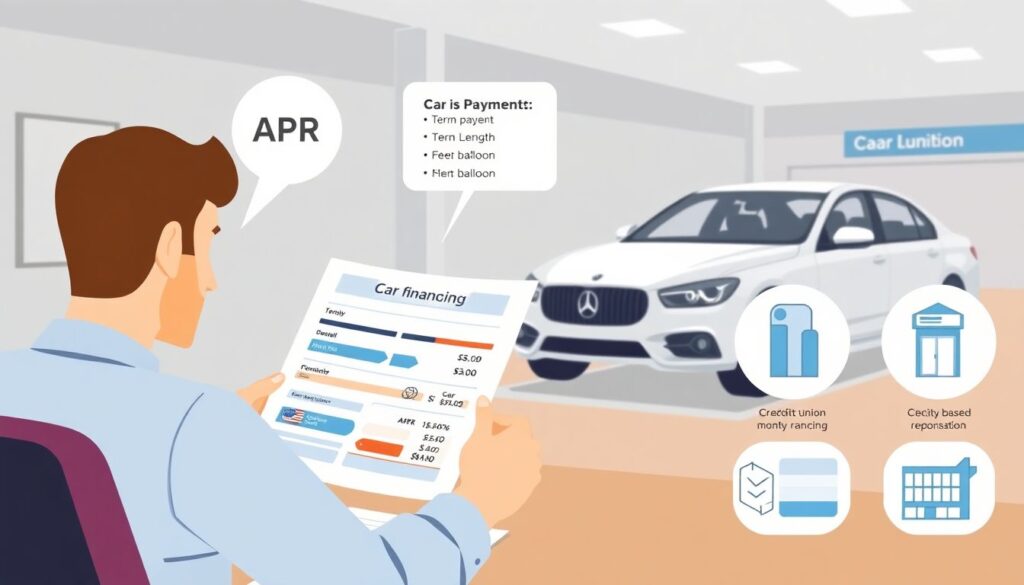
When you reach the purchase phase, financing structure becomes crucial. You must examine APR, term length, fees, and balloon payments, not just the monthly number. Affordable car finance options often include credit‑union loans, manufacturer‑subsidized financing, and in some markets, salary‑deduction schemes offered via employers. Analytically, shorter loan terms reduce total interest but increase monthly outflow, while longer terms do the opposite and may push you underwater (owing more than the car’s market value). It is essential to simulate at least three configurations in a calculator: high down payment / short term, medium down payment / medium term, and low down payment / long term. Compare total interest paid and check whether the residual value after three years would cover the outstanding principal under normal depreciation curves. Choosing the structure that maintains positive equity is as important as securing a low monthly payment.
Case study: family upgrading from minivan to EV
A second real‑world example: a family of four wants to replace a 12‑year‑old minivan with an electric vehicle to cut fuel costs and maintenance. Their initial research suggests a $45,000 EV, and they ask themselves how much should I budget for a new car if I want this model. After building a five‑year projection, they realize that high insurance and a steep initial depreciation curve make the total cost uncomfortably high compared to their $5,500 monthly net income. They then compare a nearly new off‑lease EV at $32,000 with extended warranty coverage. By plugging numbers into a calculator, they see that although the older car may need a battery check earlier, the overall lifecycle cost drops by roughly $260 per month. They set a target of a $9,000 down payment to keep payments reasonable and schedule the purchase for 18 months later, giving time to accumulate savings while their minivan remains serviceable. This disciplined pivot from a “dream spec” to a cost‑optimized spec keeps their financial ratios healthy without abandoning the core goal of switching to electric.
Setting decision thresholds: repair vs replace
One technical aspect often overlooked in budgeting is defining triggers for replacement versus repair. It is irrational to replace a car the first time a large bill appears, but equally irrational to keep injecting capital into a structurally unreliable asset. Set numeric thresholds: for example, if a single repair exceeds 50% of the current market value, or if cumulative repairs over the past 12 months exceed the vehicle’s resale price, replacement becomes the default strategy. This decision rule helps you avoid emotional decisions in the workshop under time pressure. Integrate this with your budget by ensuring that your savings plan reaches the minimum viable down payment before you expect the car to hit those risk zones based on age and mileage statistics.
Troubleshooting common budgeting problems
Even with a structured approach, budgeting for a car replacement can go off track. Typical failure modes include underestimated insurance, optimistic fuel consumption assumptions, and ignoring upcoming life changes like a move or a new child. If you find that the projected monthly cost keeps overshooting your 10–15% income target, treat this as a diagnostics problem, not a reason to abandon the plan. First, re‑run your car replacement cost calculator scenario with higher insurance quotes from at least three providers and more conservative fuel assumptions derived from real‑world user reports instead of manufacturer figures. Second, stress‑test your model: artificially reduce your income by 10–15% and see whether the car remains affordable. If not, you may need to downgrade the vehicle segment, increase your timeline to build a larger down payment, or eliminate other discretionary expenses. Troubleshooting here means iterating the model until it is robust under several plausible shocks.
Mitigating emotional bias and marketing pressure
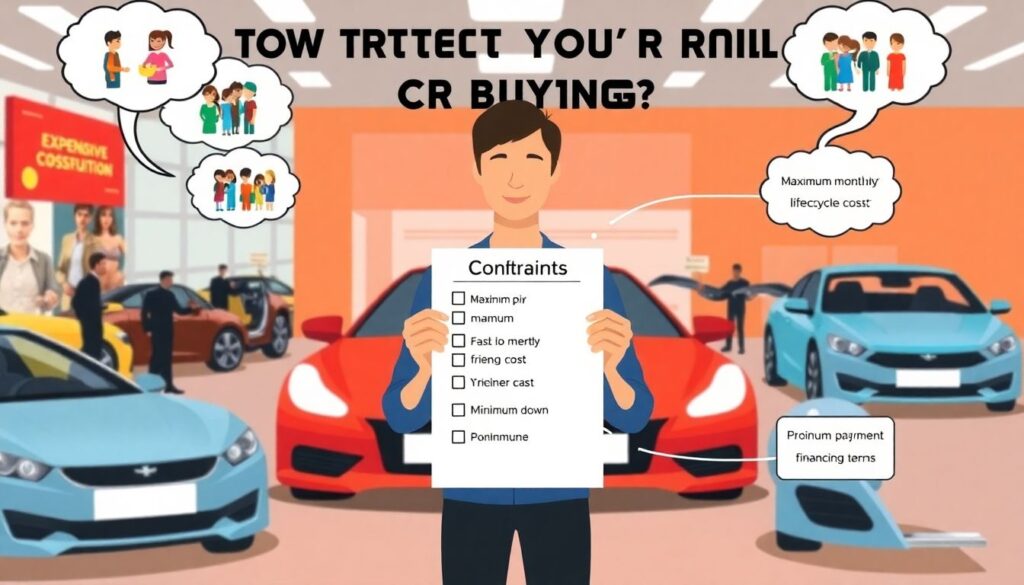
Marketing campaigns, dealer upselling and social comparison distort rational budgeting. To counter this, codify your constraints in writing before visiting a showroom: maximum purchase price, maximum monthly lifecycle cost, minimum down payment, and acceptable financing terms. Treat this as a technical specification document and do not sign any contract that violates it. When a salesperson proposes an upgrade by reframing it as “only $50 more a month”, recalculate the total interest and opportunity cost instead of reacting to the framing. Having pre‑computed ranges from your car replacement savings plan and financing scenarios creates an anchor that reduces susceptibility to impulse decisions. You can even carry a simple spreadsheet on your phone to recompute any offer against your pre‑defined framework in real time.
Aligning car replacement with broader financial goals
A car is rarely your only financial priority; there may be retirement contributions, debt reduction, or education savings in parallel. Technically, the car budget must fit inside a broader capital allocation strategy. After defining the vehicle cost envelope, verify that contributions to long‑term goals remain on track. If maximizing the car budget forces you to reduce retirement contributions below recommended levels for your age and income, that is a red‑flag signal that the chosen vehicle spec is too expensive. Viewed through a portfolio management lens, the car is a depreciating asset that provides utility but no financial return, so its allocation should not crowd out investments that compound. Periodic review—at least annually—should compare the realized car costs to your original projections and adjust future savings and replacement timelines accordingly.
By treating car replacement as a structured financial project—with defined tools, a stepwise process, and specific troubleshooting techniques—you transform what is often an emotional, ad‑hoc decision into a controlled, repeatable workflow. This not only increases the probability that you end up with a reliable, suitable vehicle, but also prevents the purchase from undermining your long‑term financial stability.