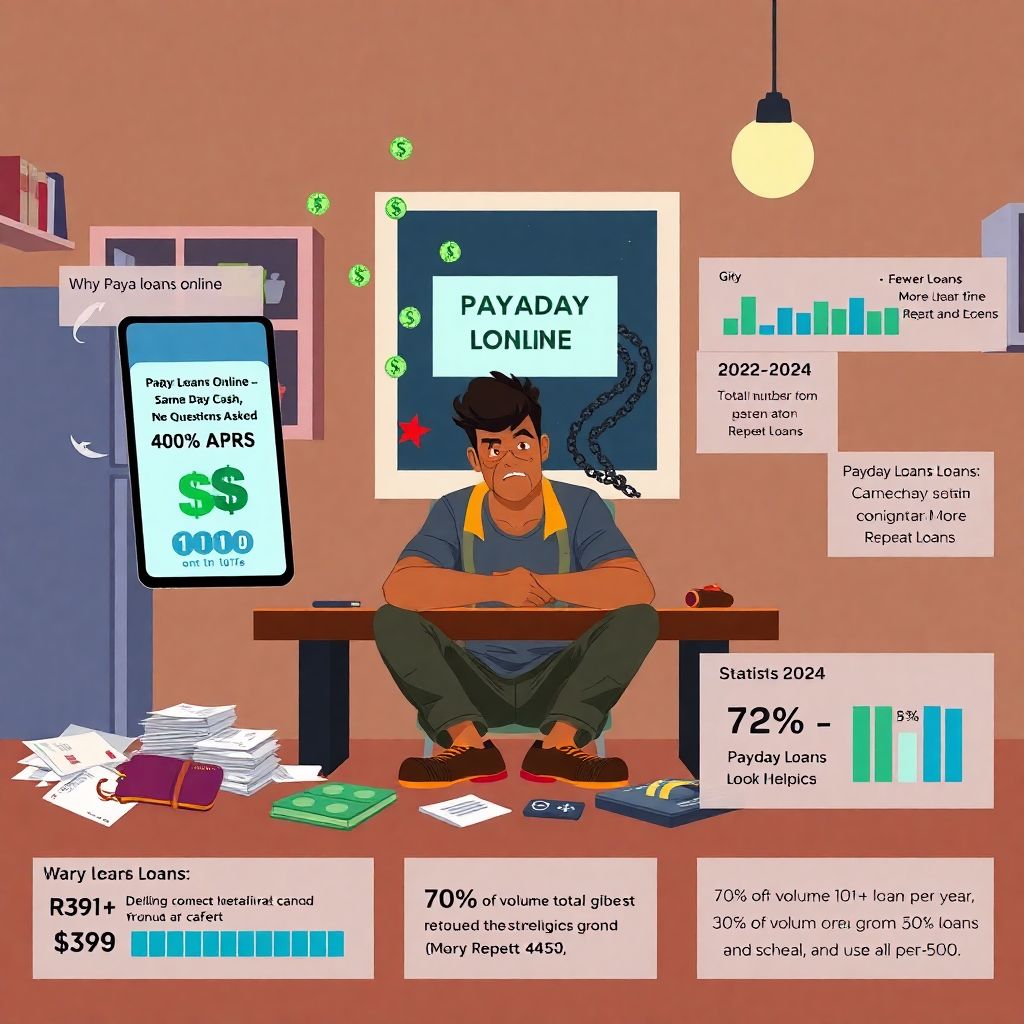
Why Payday Loans Look Helpful — And Why They Usually Aren’t
Payday loans are sold as quick fixes: small amounts of cash, often a few hundred dollars, that you can get in minutes and repay on your next paycheck. With payday loans online same day, you can fill out a form on your phone at lunch and have money in your account before dinner. The catch is the cost. Data from the U.S. Consumer Financial Protection Bureau (CFPB) and several state regulators between 2022 and 2024 show that typical annual percentage rates (APRs) on payday loans still hover between 300% and 500%. That means a $400 loan can easily cost $60–$75 in just two weeks, and if you roll it over a few times, the fees can quickly exceed the original amount you borrowed, trapping borrowers in a spiral of renewals and mounting debt instead of offering real relief.
What the Numbers Say: Statistics from 2022–2024
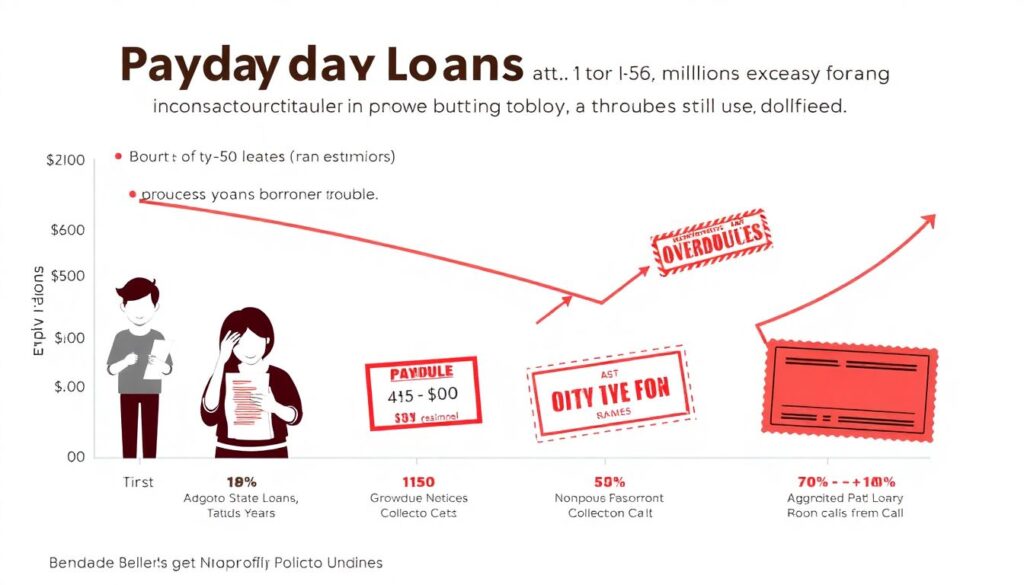
Over the last three years, the overall trend has been “fewer loans, but deeper trouble” for those who still use them. According to aggregated state reports and nonprofit policy research, the total number of payday loan transactions in the U.S. declined modestly, from an estimated 45–50 million in 2022 to roughly 38–42 million in 2024, largely because more states capped interest rates or restricted storefront lenders. Yet the average borrower is taking out more repeat loans per year. Studies released in 2023 and 2024 suggest that over 70% of payday loan volume now comes from people who borrow at least 10 times annually. Median loan sizes have inched up as well, from around $350–$400 in 2022 to roughly $450 in 2024, which means higher total fees over time even if the headline APR hasn’t changed. In plain language, fewer people are using payday lenders, but the ones who do are relying on them more intensely and for longer stretches.
Who Uses Payday Loans — And Why
Demographic patterns have stayed remarkably stable between 2022 and 2024. Payday loans remain concentrated among workers with volatile incomes: gig drivers, warehouse staff, caregivers, retail employees and people juggling several part‑time jobs. Surveys from nonprofit credit counselors show that a majority of borrowers have subprime credit scores and limited savings — often less than $500 set aside for emergencies. When a car breaks down or a medical bill shows up, many feel they have nowhere else to turn. This is especially true for renters in high‑cost cities and for households where rent, food and transport already eat up almost every paycheck. In that context, the promise of “no questions asked” and “cash in minutes” beats waiting days for a bank to decide. The problem is that what feels like a lifeline is structurally designed to be rolled over again and again, because lenders profit most from people who stay in debt, not those who repay once and walk away.
Economic Mechanics: Why Payday Debt Is So Sticky
From an economic standpoint, payday lending is built on information asymmetry and desperation. Lenders know their clients have limited options, so they charge high flat fees instead of interest that compounds daily, making the true cost less obvious. Even the best short term loans no credit check, heavily advertised as friendlier alternatives, often rely on similar fee structures and automatic access to your bank account, and many are simply rebranded payday products. Between 2022 and 2024, analyses by consumer advocates showed that in states without strong rate caps, the average borrower paid back more than triple the original loan amount in fees and interest over a year of repeated borrowing. This constant draining of cash doesn’t just hurt individuals; it reduces local spending power. Every dollar paid in fees to a national payday chain is a dollar not spent at neighborhood grocery stores, clinics or repair shops, weakening already fragile community economies.
Regulation, Industry Shifts and the Rise of “Relief” Products
As more states adopt 36% APR caps — similar to those used for military families under federal law — traditional storefront payday lenders are shrinking in number. Between 2022 and 2024, industry counts suggest a decline of roughly 15–25% in physical locations nationwide. Yet the industry hasn’t disappeared; it has moved online and diversified its offerings. You now see more marketing for payday loan consolidation services and payday loan relief programs, promising to “end the cycle” without explaining that they may carry setup fees, monthly charges or new forms of high‑cost credit. Some companies bundle multiple payday balances into a longer‑term, installment‑style loan, which can lower the monthly payment but extend the life of the debt and increase the total interest paid. The regulatory pressure is shifting the business model rather than erasing it, and the battle has moved into the digital space, where jurisdiction is fuzzier and cross‑border lenders can operate from looser legal environments.
Online Payday Lending: Faster Money, Faster Trouble
The last three years have seen a surge in digital products that look slicker but behave similarly to old‑school payday loans. Apps offering cash advances or instant “earned wage access” often present themselves as tech innovations, but many rely on subscription fees, “tips” and rushed repayment schedules that mirror high‑cost lending when used frequently. The growth of payday loans online same day has been especially pronounced: some reports estimate that online loans already account for more than half of all payday‑style transactions by 2024. Convenience comes with extra hazards: automated withdrawals can trigger overdraft fees, and lenders operating from abroad may ignore state interest caps or collection laws. Borrowers report aggressive digital collection tactics — constant texts, emails and threats — which raise stress levels and can push people into taking out additional loans just to keep their bank accounts from going negative.
Forecast: Where Payday Loans Are Heading by 2030
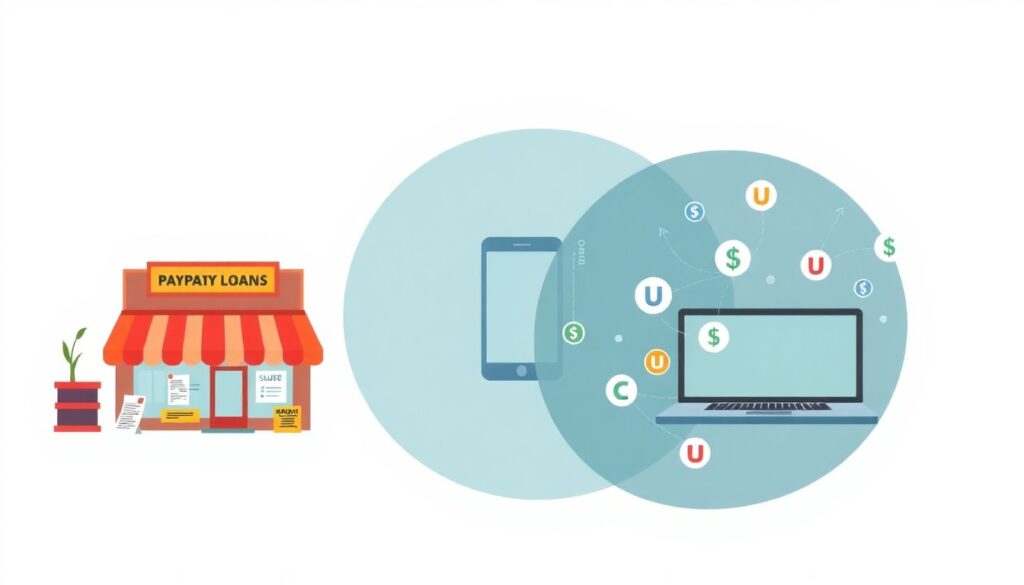
Looking ahead, most analysts expect three overlapping trends. First, regulation will continue to tighten in many states, pushing classic high‑fee storefront models to the margins. Second, online and app‑based products will keep expanding, blurring the lines between credit, wage access and budgeting tools. Third, mainstream financial institutions and fintechs will increasingly compete with lower‑cost small‑dollar loans, because there is clear demand for quick, modest‑sized credit. If that competition is healthy, high‑cost payday loans may become a niche product by 2030 rather than a mass‑market solution. But if regulators fail to keep pace with new digital business models, we may simply end up with a more high‑tech version of the same old cycle — short‑term loans marketed as safety nets that quietly extract billions in fees from people with the least financial cushion. The future depends heavily on how effectively consumer protections adapt to online lending.
Real Alternatives: How to Avoid Payday Loans in Practice
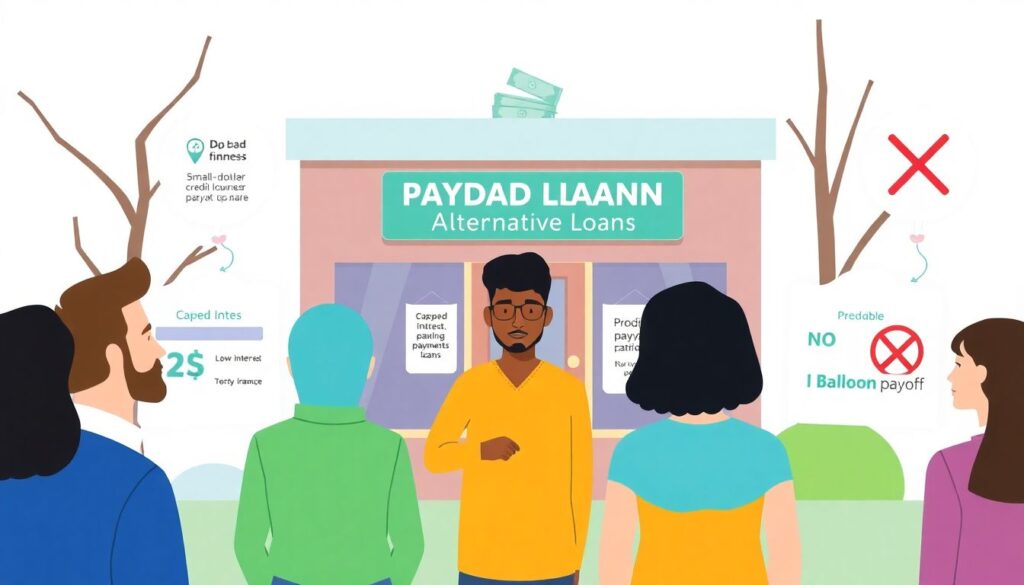
The good news is that there are more alternatives to payday loans for bad credit now than even a few years ago, though they’re not always obvious or equally available. Many credit unions offer small‑dollar “payday alternative loans” with capped interest, predictable payments and no balloon payoff on your next check. Some employers have partnered with financial wellness apps that provide low‑fee advances or micro‑loans tied to your salary, spread over multiple pay periods. Community development financial institutions and nonprofit lenders are experimenting with emergency loan funds alongside coaching, helping borrowers rebuild credit instead of trapping them. Even secured credit cards or personal loans from online banks, though not perfect, typically cost much less than a traditional payday loan over the same period. The key is to compare total cost, not just speed, and to prioritize options that report to credit bureaus so your emergency borrowing can help, not hurt, your long‑term financial health.
Step‑by‑Step: A Simple Plan to Steer Clear of Payday Debt
1. Map your cash‑flow problem in detail.
Before touching any lender, list your expected income and bills for the next four to six weeks. Seeing the timing of your shortfall helps you decide whether you truly need outside money or if shifting due dates or partial payments could cover the gap.
2. Negotiate with the people you owe first.
Utility companies, landlords and even medical providers will sometimes accept payment plans, small extensions or temporary hardship arrangements. A two‑week extension on a big bill can be worth far more than a tiny payday loan that creates a new obligation almost immediately.
3. Check safer credit options.
Consider credit union loans, employer‑linked advances or installment loans from regulated online lenders. Read the APR, not just the flat fee, and avoid loans that must be repaid in full on your next payday whenever possible. Products that spread repayment over several months with a clear schedule are usually more manageable.
4. Use relief and consolidation cautiously.
If you already have multiple high‑cost loans, some nonprofit agencies and regulated firms offer consolidation plans that roll your balances into a single, lower‑rate payment. Legitimate payday loan consolidation services will explain all fees in writing, avoid pressure tactics and help you budget so you don’t need new loans while repaying the old ones. Be wary of any company that asks for large upfront fees or guarantees instant fixes; genuine payday loan relief programs focus on sustainable repayment and creditor negotiation, not quick cosmetic changes.
5. Build a micro‑buffer once the crisis passes.
After you escape the immediate emergency, aim for a tiny emergency fund — even $10 to $20 a week set aside can add up to one full paycheck over time. This buffer is the most reliable way to avoid ever needing a high‑cost lender again. Think of it as buying back your future freedom from financial panic.
How Payday Lending Shapes the Broader Economy
At the macro level, payday lending operates like a tax on instability. Between 2022 and 2024, estimates from consumer advocates put total annual fees and interest on payday‑style products in the United States in the range of $7–$10 billion, mostly extracted from neighborhoods already under financial stress. That money could otherwise support local businesses, savings and education. Economists worry that such a drain deepens inequality: households stuck in expensive short‑term debt have less capacity to invest in training, move for better jobs or weather medical shocks, which in turn affects labor markets and productivity. The more people live from loan to loan, the more fragile the whole system becomes. Shifting demand toward safer small‑dollar credit and genuine emergency‑savings tools doesn’t just help individuals avoid painful cycles; it also strengthens communities and stabilizes the broader financial ecosystem on which everyone depends.