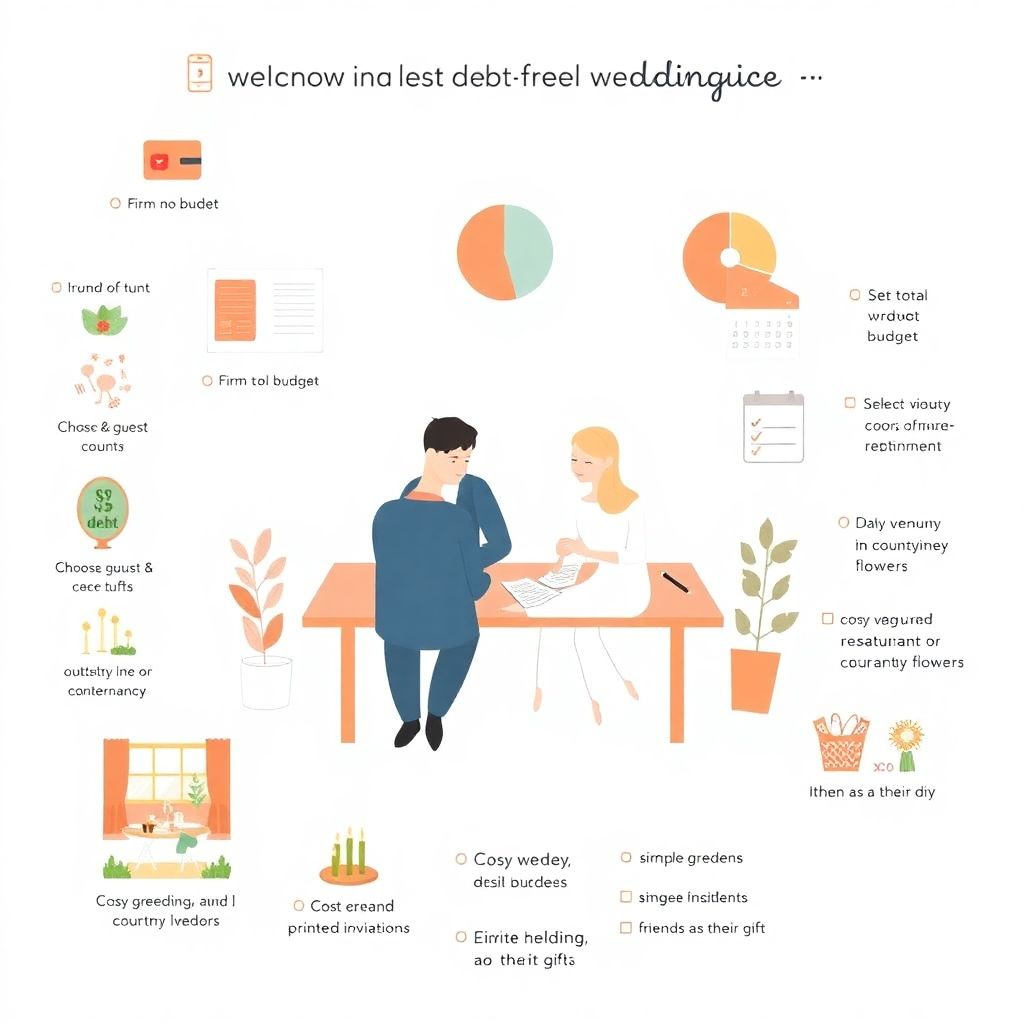
Planning a wedding without taking on debt is absolutely possible, but it does require honesty, structure and a bit of creativity. Below is a practical guide in a conversational tone, grounded in real-life cases, that will walk you through how to budget for a wedding without waking up to credit card nightmares later.
Mindset First: Decide You Won’t Go into Debt
Before any spreadsheets or apps, you need one firm rule: no debt for this wedding. That means no new credit card balances, no “we’ll pay it off after the honeymoon”, and no taking out loans just to impress guests. It sounds strict, but this boundary will make every later decision easier. Think of it like setting the frame before you start painting. When you hit a tempting offer for extravagant flowers or a bigger venue, you check it against this rule: if we can’t pay cash or from savings, it’s not happening. That simple commitment is what turns “how to plan a wedding on a budget” from a nice idea into something you can actually live out.
Small case: Maya and Ben started with a vague idea that they “didn’t want to overspend,” but they never defined a hard limit. Within two months, they upgraded their venue twice, added a cocktail hour, and used two credit cards “just for deposits.” After the wedding, they were staring at nearly $9,000 in debt. When they later helped Maya’s sister plan her wedding, they did the opposite: set a firm, shared rule of “no borrowing, no exceptions.” The second wedding had 60 guests instead of 120, but was fully paid for in cash and far less stressful.
Essential Tools: What You Need to Stay Organized

You don’t have to be an accountant to manage a wedding budget, but you do need a few simple tools and routines. Start with one central place where every number lives, whether that’s a notebook or a digital wedding budget planner. The goal is to see at a glance how much you’ve saved, what you’ve spent, and what’s left. This immediately reduces anxiety because there are no “mystery costs” floating around in your head. Add to that a shared calendar with payment deadlines and a basic system for storing contracts and screenshots of quotes, so nothing gets lost in your inbox.
Полезный минимальный набор инструментов может выглядеть так:
– A shared spreadsheet in Google Sheets or Excel online with categories (venue, food, outfits, decor, photography, etc.) and columns for “estimated”, “quoted”, and “paid”.
– A money tracking app (like YNAB, Mint, or a simple banking app with categories) to follow your day‑to‑day transfers dedicated to the wedding.
– A cloud folder for contracts, invoices, and photos of receipts, so both partners can access them and avoid arguing about “who saved what where”.
One couple, Alex and Jordan, almost booked a second photographer purely because they lost track of their initial contract and couldn’t remember what was included. Once they built a single spreadsheet and cloud folder labeled “Wedding – FINAL,” they prevented duplicate spending and spotted extra fees well before signing anything. These basic tools act like guardrails, especially when vendors start throwing add‑ons at you.
Set the Total Number First, Then Build the Wedding Around It
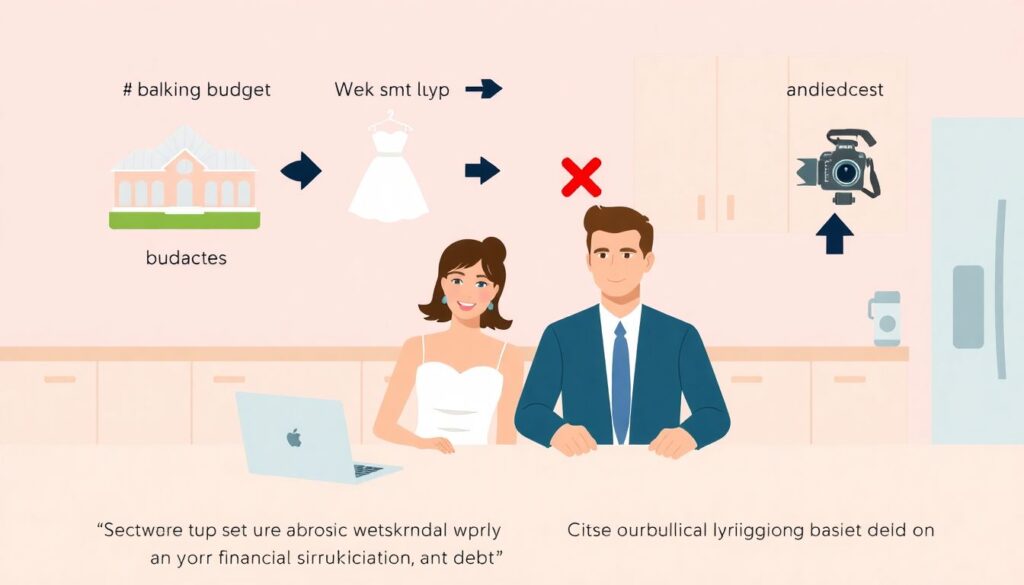
Most couples do this backward: they fall in love with a venue, then a dress, then a photographer, and only afterward try to figure out how to make it all “fit” the budget. To avoid debt, invert that logic. Sit down together and agree on your absolute maximum total wedding cost based purely on your savings and realistic cash flow before the wedding date. If you have $8,000 saved and can comfortably add $500 a month for 10 months, your total working budget is $13,000. That’s the foundation, and nothing crosses it.
Once you have that total, break it into rough percentages and turn them into real numbers. For example, 40% for venue and catering, 10% for photography, 10% for outfits, 5% for decor, 5% for stationery, 10% for entertainment, 10% for contingency and tips, and the rest for rings and miscellaneous. Adjust based on your priorities. This is where using a wedding budget planner template can help you test different scenarios quickly. If your dream venue alone would eat 60% of the budget, that’s a red flag. You either scale down the guest list, pick an off‑peak date, or choose a different place. Deciding this on paper first will keep you from signing contracts your bank account can’t support.
Prioritize Ruthlessly: What Actually Matters to You Two?
Not everything needs to be “the best.” Choose two or three elements that matter most to you as a couple and allow yourselves to spend more there, while intentionally spending far less on everything else. Maybe you care deeply about great food and a live band, but you’re indifferent to elaborate flowers or favors. That’s where you funnel the budget instead of spreading money thinly everywhere in the name of perfection. Honest priorities are the backbone of cheap wedding ideas on a budget that still feel meaningful rather than cheap in a negative sense.
Case from practice: Priya and Omar had very different priorities. She dreamed of a professional photographer and a beautiful ceremony backdrop, while he wanted an energetic DJ and enough good food that no one would leave hungry. Once they admitted these four things were non‑negotiables, they gave themselves permission to cut way back on others: simple e‑invites instead of printed ones, thrifted decor, and a dessert bar in place of a multi‑tier custom cake. The result: they stayed under $9,000 without using credit, and their guests still talk about the music and the emotional ceremony, not the absence of chair covers.
Build a Step‑by‑Step Process for Booking and Spending
To avoid random, impulsive spending, follow a clear sequence when making wedding decisions. Think of it as a flow: define budget → choose guest count → select venue and date → lock in top‑priority vendors → fill in the rest. Each step constrains the next, so costs don’t spiral. Without that order, couples often book a band before knowing the venue’s noise curfew or invest in decor before confirming what the venue already includes, which leads to waste and frustration.
Пример поэтапного процесса:
– Step 1: Fix the total budget and rough allocations, including a 10% “oh no” fund for surprises.
– Step 2: Agree on guest count ranges (for example 40–50, 50–80, etc.) before emailing venues, because the number of people is the biggest cost driver.
– Step 3: Shortlist venues that can host your guest range within your allocated venue/catering budget; ask about hidden fees (service charges, minimum spend, corkage fees).
– Step 4: Book priorities next: photographer, officiant, and entertainment, comparing at least three quotes each to keep perspective.
– Step 5: Only after these big items are locked do you move to outfits, decor, and smaller extras, using leftover budget instead of assuming “we’ll figure it out”.
For instance, when Elena and Mark followed this sequence, they realized early that their first‑choice rooftop venue would consume too much of their total. Because they hadn’t booked anything else yet, they could switch to a cozy restaurant with a private room, cutting venue and catering costs in half. That freed money for a photographer and a weekend getaway, all still within their cash budget.
Smart Ways to Cut Costs Without Making It Feel Cheap
Cutting costs doesn’t have to mean cutting joy. The secret is focusing on guest experience and your own memories, not on things that only a wedding blog would notice. Low cost wedding packages from local restaurants or community halls often include chairs, basic linens, and sound systems, which can shave hundreds off rental costs, even if they don’t market themselves as “wedding venues.” This is where you can discover surprisingly elegant, budget‑friendly solutions.
Here are several cheap wedding ideas on a budget that couples have used successfully:
– Host a daytime wedding with brunch or lunch instead of a full dinner; food is cheaper, and guests still feel well taken care of.
– Choose an off‑season month or a weekday; many venues and photographers offer quieter‑day discounts if you ask directly and are flexible on dates.
– Simplify flowers by using greenery, candles, and one or two statement arrangements rather than decorating every corner; most guests won’t notice the difference.
One real example: Luis and Hannah wanted an outdoor ceremony with dinner for 70 guests but balked at traditional venue prices. They found a family‑run countryside inn that offered low cost wedding packages intended for small corporate retreats. By asking if they could adapt one of these packages for a wedding, they secured two nights’ accommodation for close family, a buffet, and the event space for less than one standard “wedding” quote at other locations. Guests loved the intimate setting, and the couple walked away debt‑free.
Using Professionals Strategically: When to Pay for Help

Not everyone needs a full‑service planner, but that doesn’t mean you have to do everything yourself. Many couples burn out trying to manage every last detail and end up overspending because they’re too tired to negotiate or compare options. Affordable wedding planning services can be hired on a limited basis: for example, a “month‑of coordinator” to run the day itself, or a few consulting sessions at the beginning to help structure your budget and priorities. You pay a fraction of full planning fees while still benefiting from vendor knowledge and problem‑solving.
Consider the story of Chris and Natalie. They planned to DIY everything and quickly got overwhelmed by contracts, timelines, and seating charts. Halfway through, they hired a part‑time planner who reviewed their budget, pointed out two redundant rentals, and flagged an unnecessary bar package that would have added $1,200. The fee they paid the planner was effectively offset by the savings she found for them. Instead of seeing professional help as an all‑or‑nothing luxury, treat it like targeted support that can guard your budget and your nerves.
Monitoring, Adjusting, and Saying “No” in Real Time
Even the best budget won’t hold if you never look at it again. Set a recurring “wedding money check‑in” every week or two where you update real spending, compare it to your original estimates, and decide on any course corrections. This is where your spreadsheet or wedding budget planner becomes a living document, not a pretty file you abandon after month one. If one category goes over—say, you splurge slightly on photography—you must consciously trim another category to compensate, rather than just hoping it all “evens out.”
During these check‑ins, practice saying “no” together. If a vendor proposes upgrades or a well‑meaning relative suggests adding a dessert bar on top of the cake, run it through a quick filter: does it align with our top priorities, and can we pay for it in cash without touching savings meant for emergencies? If not, you decline, politely but clearly. A couple I worked with, Jenna and Leo, learned to say, “That sounds lovely, but it’s not in our plan,” both to vendors and to family. That phrase alone saved them from multiple last‑minute expenses and helped them preserve their relationship with money—and with each other.
Troubleshooting: What to Do When Things Go Off Track
Budgets rarely go perfectly. A vendor might raise prices, a family member may invite extra guests, or you may simply underestimate a category. The key is not to panic or quietly swipe a credit card but to trouble‑shoot calmly and adjust. When something goes wrong, pause and revisit your overall total rather than only the affected category. Decide whether to reduce the scale elsewhere, find a cheaper alternative, or drop the new idea altogether. This mindset keeps you aligned with the no‑debt rule instead of treating it as optional when things get messy.
Типичные проблемы и варианты решений:
– Problem: Venue suddenly adds mandatory service fees you didn’t account for.
Solution: Ask them to detail every charge, then remove or downsize add‑ons like upgraded linens or extra bar hours; if necessary, cut decor spending to absorb the increase without borrowing.
– Problem: Guest list creep (parents adding cousins, friends bringing plus‑ones).
Solution: Gently enforce original boundaries, or if you genuinely want extra guests, reduce per‑person costs by simplifying the menu or skipping favors.
– Problem: You fall in love with something over budget (dress, band, decor).
Solution: Wait 48 hours before deciding; if you still want it, move money from a lower‑priority area in writing so the overall total doesn’t change.
A real case: Sam and Lina misread their catering contract and discovered, three months before the wedding, that the quoted price didn’t include tax and service—a 25% jump. Instead of putting the difference on a card, they called the caterer, removed one course, and shortened the open bar by one hour. They also cut printed menus, using a single chalkboard display instead. Guests barely noticed the changes, but the couple noticed that the final bill still matched their original cash budget.
Leaning on Friends, Family, and Community—Without Guilt
People around you often want to help but don’t know how. If you have talented friends or relatives—someone who bakes, sings, does hair, or is great with photography—consider inviting them to contribute as their wedding gift rather than buying something from a registry. Done respectfully, this can dramatically lower costs while making your celebration more personal. The key is to be clear about expectations and to give them an easy way to decline if they’re not comfortable.
One couple, Rita and Paul, had a friend who was an amateur photographer and another who worked as a florist. Instead of purchasing separate gifts, both friends offered their skills. The couple still paid for materials and a modest fee, but it was far lower than commercial rates. They combined this with one of the simpler low cost wedding packages from a nearby hotel, which already included chairs and basic decor, so each friend’s contribution became the highlight rather than a stress point. The wedding felt deeply personal, and no one had to overstretch financially to make it happen.
After the Wedding: Protecting Your Future Finances
The story doesn’t end when the last guest goes home. The real win of a debt‑free wedding is starting married life without payment hangovers. Right after the honeymoon, review what you spent compared to your plan. Note what worked and what didn’t: where you underestimated, where you could have saved more, and which splurges were truly worth it. This reflection helps you with the next financial milestones: building an emergency fund, planning for a home, or saving for future travel or children.
Many couples who avoided loans for their wedding report feeling more united about money afterward. They’ve already practiced joint decision‑making, saying no to social pressure, and solving problems under budget constraints. Instead of sending monthly checks to a credit card company, they can redirect the same amount into savings or investments. In that sense, learning how to plan a wedding on a budget isn’t just about one day—it’s a training ground for your entire financial life together. By treating your wedding as the first big project you manage as a team, you can celebrate without debt and carry those skills into every goal you tackle next.
Комментарии