What digital wallets really are (and why your budget should care)
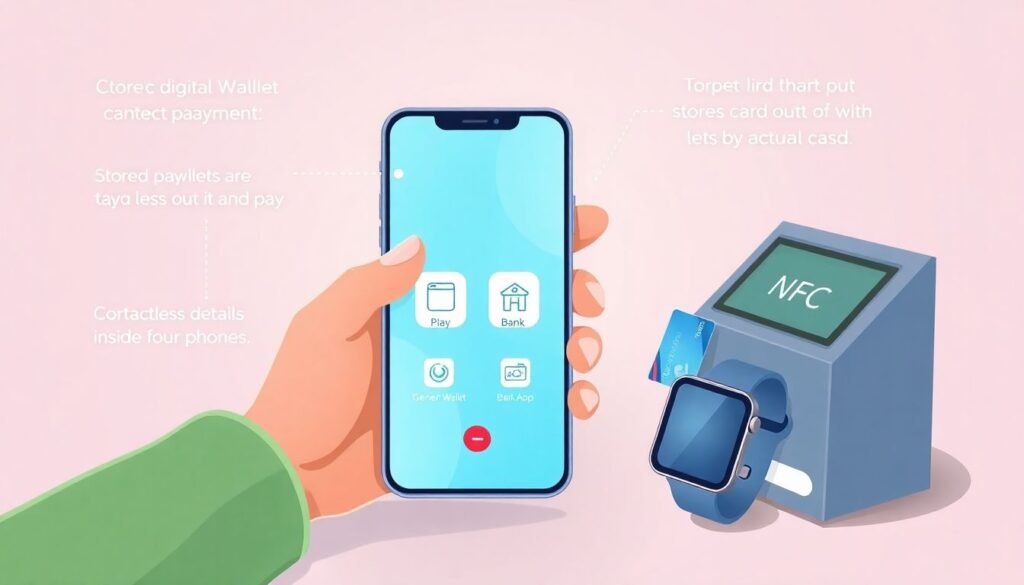
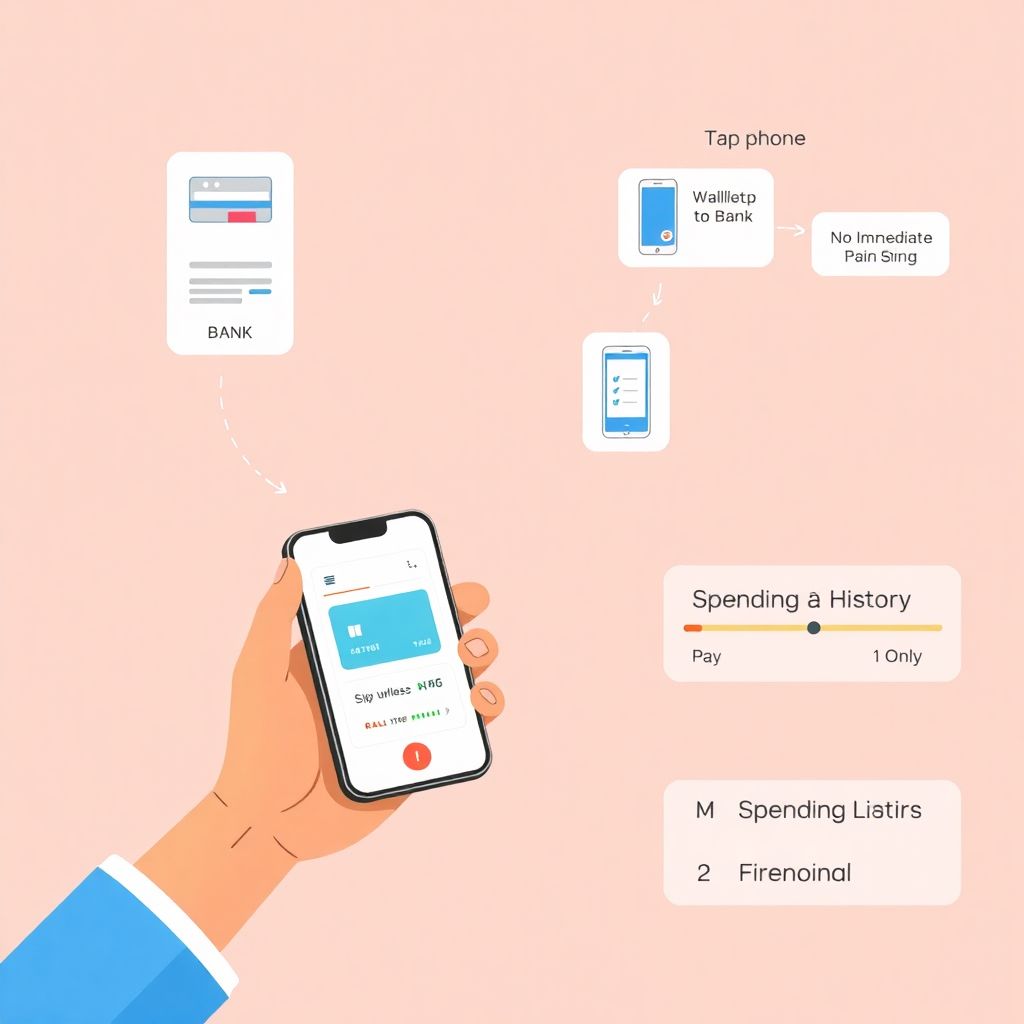
Digital wallets sound fancy, but in practice they’re just software that stores your payment details and lets you pay without pulling out a physical card or cash. Think Apple Pay, Google Wallet, PayPal, or your bank’s app. Contactless payments are the “tap” part: your phone, watch or card talks to the terminal via NFC or a QR code, and the transaction flies through in seconds. From a budgeting angle, the crucial detail is that every tap leaves a perfectly time‑stamped, categorized trail. Imagine a simple diagram in your head: three boxes labeled “Card,” “Wallet App,” “Bank.” A payment arrow goes from Wallet App to Bank, while a second arrow goes sideways into a “Spending History” box. That second arrow is what turns a convenient payment method into a financial tracking tool you can actually use to manage habits, not just speed up checkout.
How contactless payments change your spending behavior
There’s a reason some people say “cash hurts more.” Handing over physical bills creates a tiny moment of friction and awareness. Contactless payment apps with budgeting features remove that moment and can make buying easier than thinking. The psychological effect is like switching from carrying a fixed envelope of cash to having a silent, invisible line of credit in your pocket. Now picture a mental diagram with two paths: on the left, “Cash → Notice empty wallet → Stop spending”; on the right, “Tap phone → No immediate pain → Check app later.” The risk is obvious: you might overspend before your rational brain catches up. But the same tools can counteract this if you let them. Instant notifications, real‑time remaining‑budget counters, and automatic category alerts reinstall that missing “ouch” moment, only now it pops up on your screen instead of in your hand as disappearing banknotes.
Basic wallets vs. budgeting‑centric wallets
Not all digital wallets are built with your budget in mind. Some services focus almost entirely on speed and checkout convenience, acting like a digital version of your plastic card. Others aim to be the best digital wallets for budgeting and saving, layering on analytics, savings “pockets,” and hard limits for specific categories. If you compare digital wallets for managing monthly budget, imagine a horizontal line diagram: on the far left, plain “Pay Only” wallets that just send transactions to your bank; in the middle, wallets that show simple spending history; on the right, “Budget‑First” wallets that allow category caps, savings goals, and forecasts. Moving from left to right gives you more control but also more notifications, decisions, and setup time. The trick is choosing a point on that line that matches your willingness to actively manage money, not just passively watch reports.
Spending tracking: when your wallet becomes a mini accountant
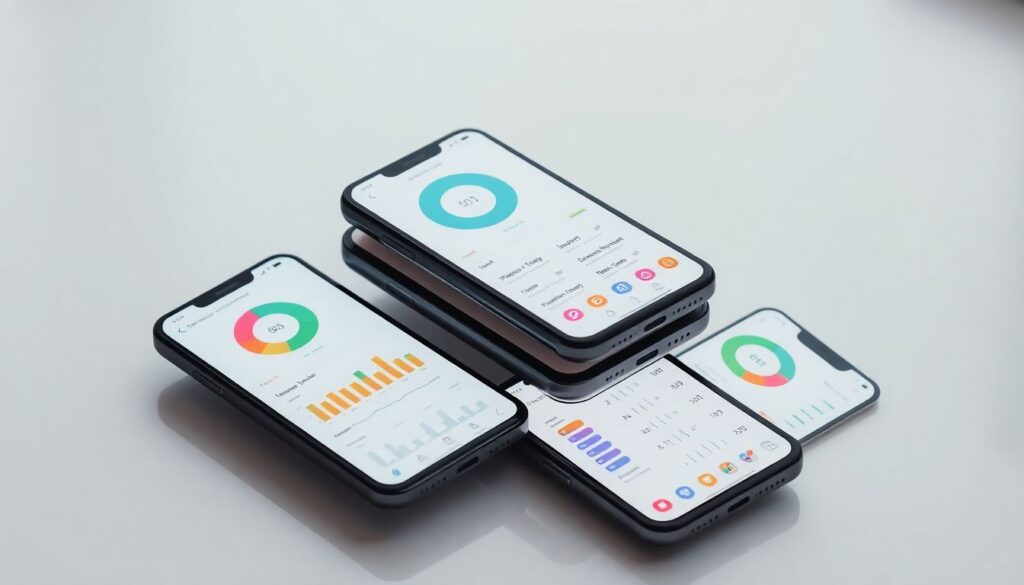
Modern apps increasingly behave like tiny accounting systems living in your phone. Top mobile wallet services with spending tracking can automatically sort payments into categories such as groceries, transport, subscriptions and entertainment, then show you weekly and monthly charts. Picture a stacked bar chart in your mind: each bar is a month, divided into colored slices for each category, slowly shifting shape over time as your habits change. That visual is powerful because it compresses dozens of line‑items into an almost instant “health check” of where your cash is really going. The catch is accuracy and discipline. If the app mislabels transactions and you never correct them, your diagram lies. If you split bills with friends and don’t log reimbursements, your spending looks bigger than it really is. When you treat the app as your assistant and do quick clean‑ups, it can show patterns you would never spot in a raw bank statement.
Different approaches: automation vs. conscious friction
Let’s compare different approaches to using digital wallets for budget control. One camp prefers maximum automation: connect every card, let the wallet log everything, turn on automatic category rules, and review a single dashboard each week. This approach shines for busy people who hate spreadsheets. The mental diagram is a closed loop: “Tap → App logs → Monthly summary → Small tweaks.” The other camp intentionally introduces friction. They still pay via secure contactless payment solutions for personal finance, but they add manual steps such as approving each purchase in a notes app, or transferring a fixed weekly sum into a separate wallet just for variable spending. Their diagram has a branching point after each tap: “Tap → Quick reflection → Confirm or back off next time.” Automation catches leaks you don’t see; deliberate friction keeps you emotionally engaged with your money. The most resilient strategy usually blends both: automate the boring tracking, but keep manual checkpoints for big or sensitive categories like dining out or online impulse buys.
Security, limits, and the hidden cost of “too easy” money
From a pure security angle, mobile wallets can actually be safer than physical cards, thanks to tokenization, biometric locks, and one‑time transaction codes. Yet budget security is a bit different: it’s about protecting you from your own impulses as much as from hackers. Many secure contactless payment solutions for personal finance now let you lock specific merchant types, freeze a virtual card instantly, or set daily spending caps directly in the wallet. Visualize a circular diagram split into three zones: “Fraud Protection,” “Overspending Protection,” and “Data Privacy.” A mature wallet should at least touch all three, not just the first. If your app only cares about fraud, you’ll likely feel safe while your subscription list quietly balloons and small daily charges pile up. Using spending alerts, category limits, and separate virtual cards for risky websites or travel can confine damage, whether it comes from a stolen token or from a late‑night shopping spree you regret in the morning.
Linking wallets with savings goals and long‑term plans
Digital wallets stop being purely transactional once you tie them to goals. Some of the best digital wallets for budgeting and saving let you round up each payment into a savings pot, move a percentage of income into a “future bills” space, or visualize how today’s tap affects your month‑end cash buffer. Imagine a flow diagram: income flows into your main account, then arrows branch into “Fixed Bills,” “Daily Spending Wallet,” and “Savings Buckets.” When your contactless payments are linked only to the “Daily Spending Wallet,” you protect rent and savings from casual purchases by design. In contrast, using a single undivided account for everything turns your budget into a foggy pool where priorities blend and disappear. Connecting your wallet to long‑term goals—debt payoff, emergency fund, travel—turns every fast purchase into a small choice in a larger story, instead of an isolated, forgettable tap.
Choosing your mix of tools and habits
With so many options, it helps to mentally compare digital wallets for managing monthly budget across three questions: how much automation you want, how much friction you can tolerate, and how visual you like your data. Some people thrive with one primary wallet that handles almost all payments and reports; others prefer to split roles, perhaps one app for daily spending, another for shared expenses, and a more traditional budgeting app for big‑picture planning. Instead of chasing a mythical “perfect” app, focus on whether your current setup answers three daily questions: how much can I safely spend today, what bills are coming soon, and are my goals still moving forward. If your current tools and habits can’t answer those within a minute or two, experimenting with top mobile wallet services with spending tracking or more focused contactless payment apps with budgeting features is worth the effort, as long as you stay in control of the taps, not the other way around.