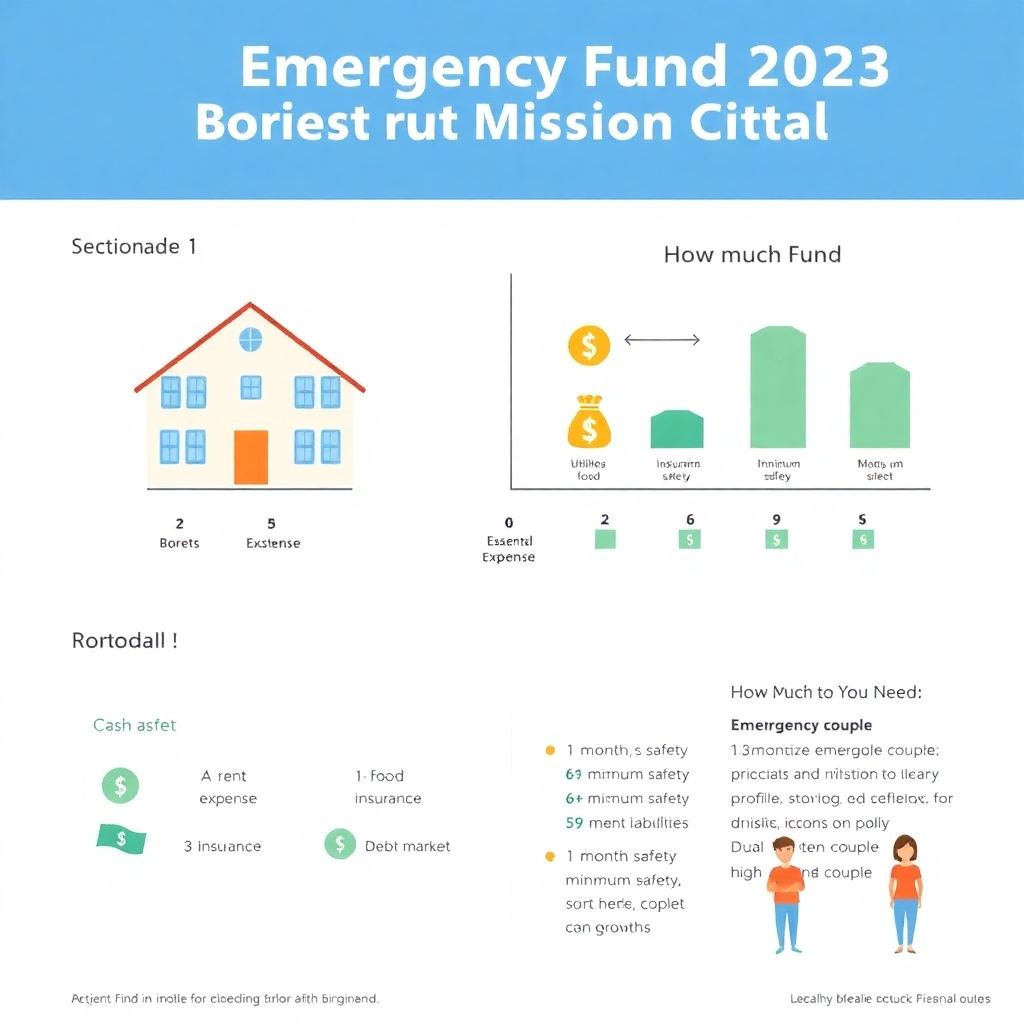
Emergency funds in 2025: boring, but mission‑critical
An emergency fund is essentially your personal liquidity buffer: cash parked in a low‑risk, highly accessible vehicle to absorb income shocks and unplanned expenses without triggering high‑interest debt. In 2025 this looks less like a pile of bills in a drawer and more like a structured cash management system spread across accounts with specific roles. Think of it as a tiny balance sheet inside your household finances: assets (cash) explicitly matched to short‑term liabilities (rent, utilities, insurance deductibles). The goal is not “max return”, but capital preservation, fast settlement, and psychological safety, so the design decisions differ sharply from long‑term investing where volatility and drawdowns are acceptable.
How much emergency fund do you really need?
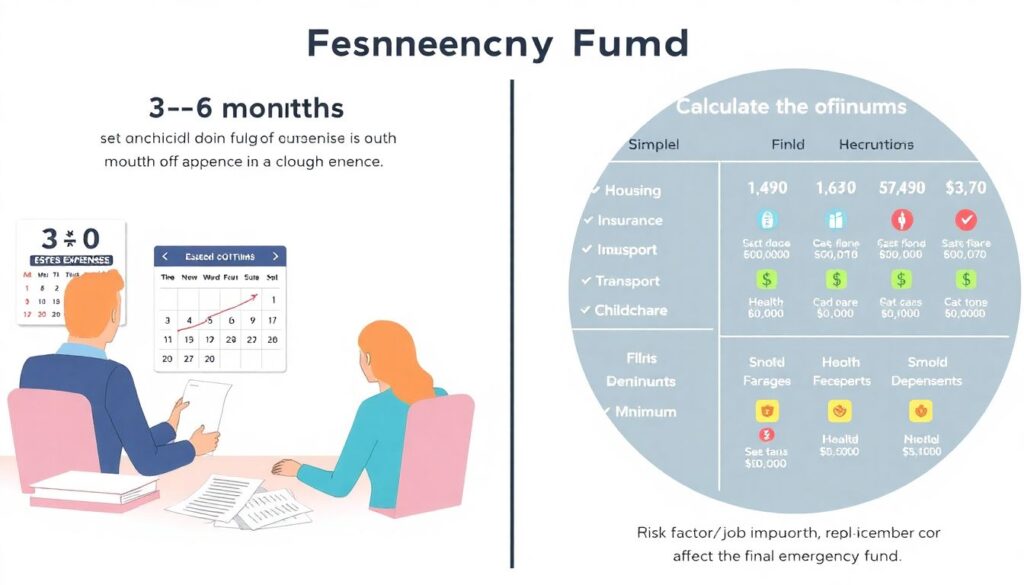
The classic “3–6 months of expenses” rule is a rough heuristic, but answering “how much emergency fund do i need” requires mapping your real risk profile. Instead of counting income, focus on essential outflows: housing, food, insurance, transport, childcare, debt minimums. Then overlay risk factors: job stability, industry cyclicality, health status, number of dependents, and access to backup credit. A dual‑income household in stable public sector roles may operate safely at three months of core expenses, while a freelancer in a volatile field may need nine to twelve. Make it dynamic: reassess annually or after big life changes such as a child, mortgage, or job switch.
Rules of thumb vs calculators: picking a sizing method
You can size the buffer using either quick heuristics or more granular models. The simple approach is tiered: one month for basic resilience, three for minimum safety, six or more for high‑risk profiles. A more precise workflow uses an emergency fund calculator online that lets you plug in expense categories, income volatility, severance expectations, and unemployment duration assumptions. Calculators are helpful to quantify scenarios, but they’re only as good as the inputs, so sanity‑check outputs against reality: if a tool suggests eighteen months of cash for a highly employable engineer in a hot market, that probably indicates overly pessimistic settings, while two months for a single parent in a niche industry may be dangerously optimistic.
Where to keep emergency fund cash without over‑engineering it
The practical question is where to keep emergency fund cash so that it remains liquid, safe, and at least mildly productive. Under your mattress fails on inflation and security, while putting it into equities or long‑term bonds fails on volatility and access risk. For most people, the backbone is a federally insured, online high‑yield savings account at a reputable institution, ideally linked to your main checking for fast transfers. Aim for same‑day or next‑day availability, no withdrawal penalties, and clean digital interfaces. Avoid chasing exotic products for a few extra basis points if they add friction, lockup periods, or complex disclosure documents that you are unlikely to monitor closely under stress.
Money market vs savings: understanding the trade‑offs
Many savers get stuck comparing money market account vs savings for emergency fund purposes, but the differences are mostly about yield, access mechanics, and subtle fee structures. A modern high‑yield savings account usually offers straightforward variable APY, easy ACH transfers, and minimal transaction limits, making it ideal for urgent withdrawals. A bank money market account can pay slightly higher interest and may come with check‑writing or debit access, but may enforce transaction caps or tiered rates. Historically, money market mutual funds carried a bit more risk and complexity, so they’re better suited for larger, more sophisticated portfolios. For most households, the best high yield savings account for emergency fund needs is simply the one that offers strong insurance coverage, reliable online banking, and frictionless movement of funds.
Layered setups and newer fintech tools
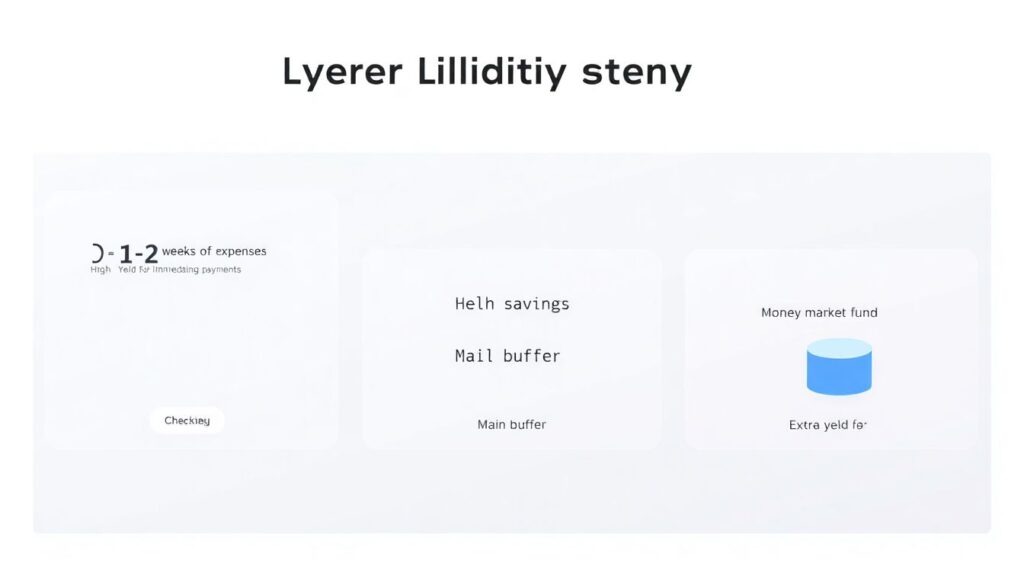
A practical architecture is layered liquidity: keep one to two weeks of expenses in checking for immediate payments, the bulk of your buffer in high‑yield savings, and optionally a small slice in a conservative money market for marginally better yield if your balance is substantial. Fintech platforms now add automation features like “round‑ups”, smart rules that sweep surplus cash into savings, and goal‑based sub‑accounts labeled “job loss” or “medical buffer”. The upside is behavioral: you save consistently without relying on willpower, and you can see dedicated balances for each risk category. The downside is platform risk, potential transfer delays to your primary bank, and the temptation to push for higher yield products that dilute safety, so scrutinize terms and back‑end partner banks.
How to choose your emergency fund setup in practice
Choosing a configuration starts with your behavior patterns, not just product specs. If you tend to raid savings impulsively, you may want your emergency account at a different bank than your checking, adding a small psychological “speed bump” without hurting access in real emergencies. If you’re highly organized, multiple labeled sub‑accounts inside one institution can work well. Evaluate candidate banks on four axes: insurance coverage, effective interest rate after fees, withdrawal mechanics, and digital reliability. Run a quick personal stress test: imagine losing your job on a Friday; walk through how many clicks or days it would take to cover rent, food, and insurance. Anything that feels fragile in that scenario needs redesign.
A step‑by‑step build plan you can actually follow
Translate theory into action by defining a target in currency, not months: for example, 6 × 1,200 equals 7,200 as your end goal. Next, set a contribution rate as a fixed line item in your budget, like 5–15% of take‑home pay, automated on payday into your emergency account. Start with a smaller milestone—say 1,000—because that amount already absorbs many routine shocks like car repairs. As your fund grows, periodically check that the yield is still competitive and the account remains fee‑free; switching providers early is easier while balances are modest. Once you hit your target, freeze contributions and reallocate surplus cash toward higher‑return investments or debt repayment, while still recalibrating the target whenever your baseline expenses shift materially.
Emergency fund trends and realities in 2025

In 2025, higher base interest rates make cash buffers less punishing to hold, so emergency funds can earn meaningful yield without leaving the safety zone, but this also creates noise as banks adjust rates frequently and market new products aggressively. Expect more bundling, where digital banks pair checking, savings, and investment accounts with automated rules and analytic dashboards, blurring the line between “cash management” and “portfolio management”. Regulatory scrutiny around liquidity and deposit insurance remains intense, which is good for safety but may alter specific APYs and account features over time. The sustainable approach is to standardize on a simple, resilient structure, review it once or twice a year, and resist the urge to constantly tinker in pursuit of marginally higher returns at the expense of clarity and rapid access.
Комментарии