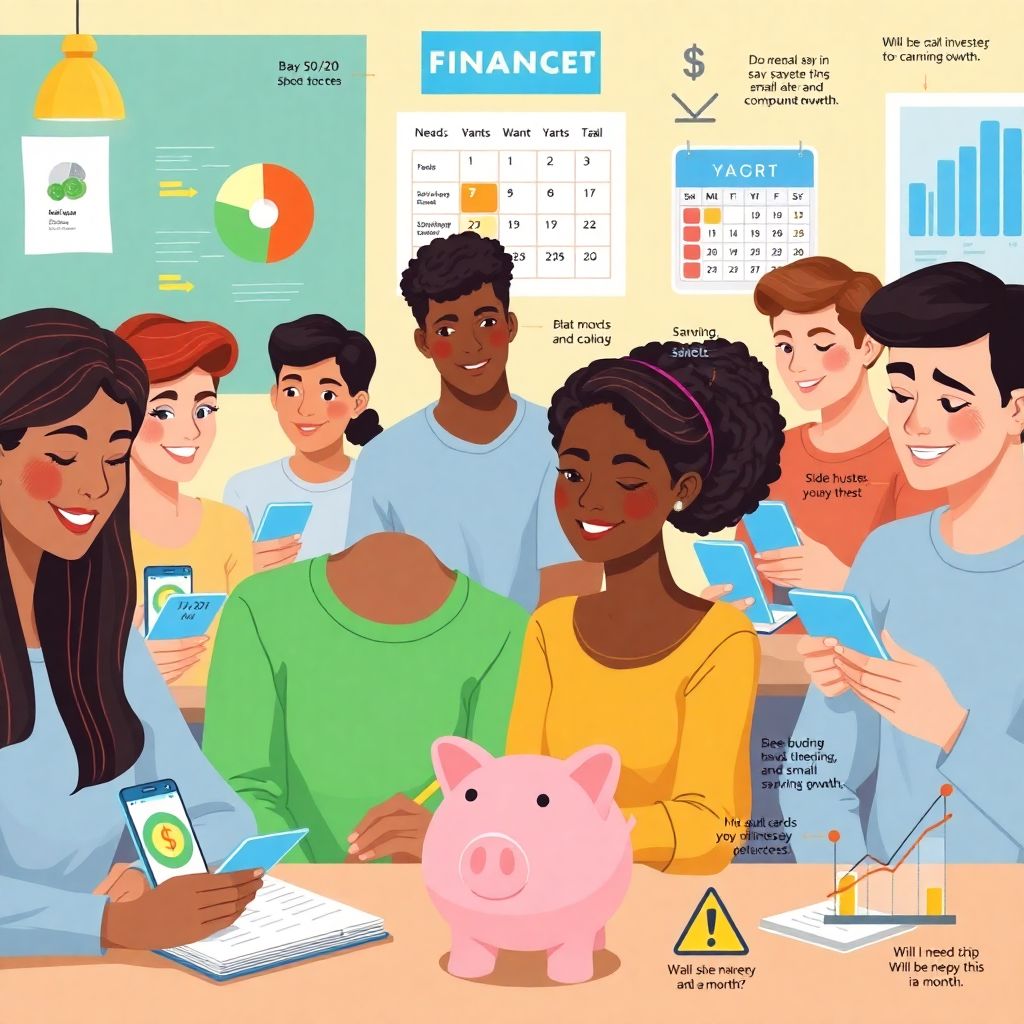
Why Youth Financial Education Matters More Than Ever
If you look around, money decisions are everywhere: subscriptions, in‑app purchases, student loans, side hustles, crypto hype. That’s why financial education for youth programs are becoming less of a “nice extra” and more of a survival skill. When young people learn early how money really works, they don’t just avoid debt traps; they gain freedom of choice. Instead of drifting from paycheck to paycheck, they can plan studies, travel, business ideas and even early retirement with a clear head. The goal of youth financial education is not to turn every teenager into a Wall Street pro, but to build steady, healthy money habits that quietly support their life for decades.
Step 1: Start With a Clear Money Mindset
Understand What Money Is (And What It Isn’t)
Before talking about budgets, apps and investments, it helps to adjust how a young person thinks about money. Money isn’t a score in a game or a status symbol; it’s a tool for exchanging time, energy and skills. You get paid for value you create for others, and you spend on things that bring you value in return. When teenagers see money only as something to flex on social media or chase impulsively, they’re more likely to fall into debt and impulse buying. A healthier mindset treats money as a neutral resource to be directed, not a source of shame, pride or drama.
Common Mindset Mistakes Beginners Make
One of the biggest beginner errors is the “I’ll start later” mentality. Many teens and young adults think real money decisions begin with a “serious” job or huge income. In reality, habits you build managing pocket money or a part‑time paycheck are the same habits you’ll bring into your first full‑time salary. Another frequent mistake is magical thinking: assuming “I’ll somehow be rich one day” without any concrete plan. Finally, a lot of youth believe talking about money is rude or awkward, so they avoid asking questions and keep repeating their parents’ financial habits—even when those habits clearly don’t work.
Step 2: Track Every Dollar (Without Turning It Into Torture)
Simple Tracking Before Full Budgeting
Before any complicated plan, the first job is to understand where money actually goes. For two or three weeks, write down every expense: snacks, game skins, streaming services, rideshares, quick online purchases. No judgment, no pressure—just data. You can use a notebook, notes app or one of the best financial literacy apps for teens, which often sync automatically with bank cards and send gentle reminders. The point here is to see real patterns in black and white, because most people seriously underestimate how much they spend on “small stuff” that adds up surprisingly quickly.
Beginner Mistakes in Tracking
Newcomers often quit expense tracking for two reasons: they make it too complicated or they expect perfection from day one. Some teens try to create a full‑blown spreadsheet with dozens of categories, get overwhelmed and drop the habit. Others miss a couple of days, feel like they’ve “failed” and just give up. Another typical mistake is only tracking cash while ignoring digital payments, or the opposite—forgetting about cash entirely. To avoid this, start with just a few broad categories like “food,” “fun,” “transport” and “other,” and remind yourself the goal is awareness, not flawless accounting.
Step 3: Build a Realistic Beginner Budget
The 50/30/20 (Or 60/30/10) Starting Point
Once you know where the money goes, you can design a simple budget. A common beginner structure is 50% for needs (food, basic transport, phone), 30% for wants (entertainment, hobbies, treats) and 20% for savings and goals. If income is small or irregular, you can adjust to 60/30/10 and then slowly increase the savings portion as you grow. Online budgeting classes for young adults often start with these simple ratios because they’re flexible and easy to remember. The main rule: decide your categories before you get paid, not after the money is already halfway spent.
Typical Budgeting Errors
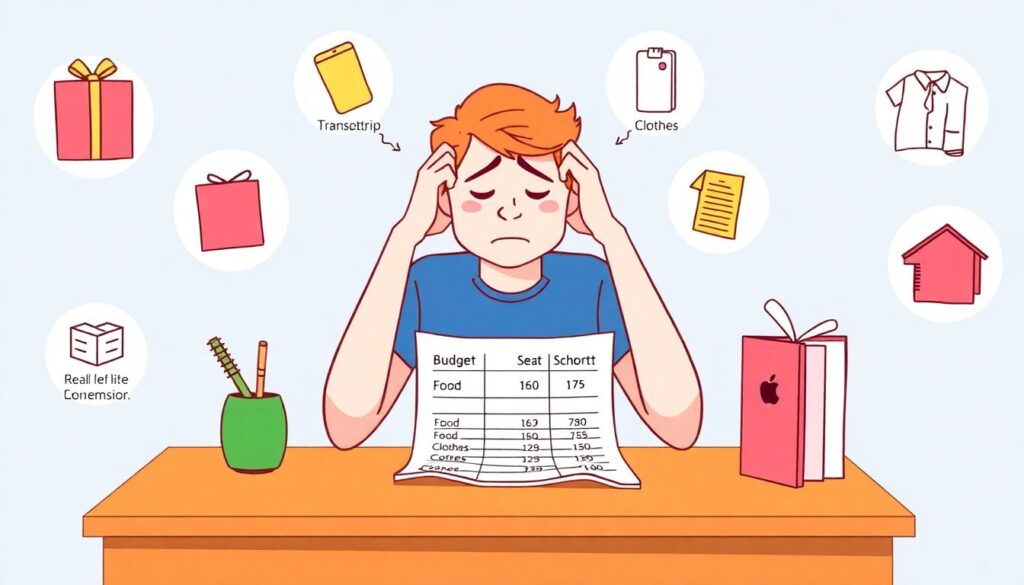
A frequent rookie error is writing a “perfect” budget on paper that ignores reality. Teens may set unrealistically low numbers for food or transport, then get frustrated when they “break” the budget in week one. Another mistake is forgetting irregular costs such as gifts, clothes, school trips or subscription renewals. These “surprise” expenses are often not surprises at all; they just weren’t planned for. Some beginners also treat the budget as a suggestion instead of a decision, constantly moving money from savings into “fun” without limits. A more solid approach is to keep a small “miscellaneous” category and promise yourself you won’t touch the savings number unless it’s a true emergency.
Step 4: Save First, Not Last
Pay Yourself Before You Pay Anyone Else
The golden rule of youth savings is simple: set money aside as soon as it arrives. If a teenager waits to see what’s “left over” at the end of the month, usually there’s nothing. Turning saving into an automatic action—like brushing your teeth—gradually builds a cushion that makes life less stressful. Youth savings and investment programs often encourage setting a specific percentage, for example 10–20% of every payment, no matter how small. This removes guesswork and stops the internal debate of “save or spend?” each time money comes in, because the decision is already made in advance.
Beginner Saving Mistakes
Many young people think saving only makes sense with big amounts, so they delay until they have a higher‑paying job. This is a trap. The power of saving is not in the amount at the start, but in consistency and time. Another mistake is keeping savings in the same account used for everyday spending; it’s too easy to dip into it for small temptations. A practical solution is to open a separate savings account, ideally with no card linked. It’s also a misstep to save without a purpose: clear goals like “emergency fund,” “new laptop” or “travel fund” make it much easier to stay motivated.
Step 5: Learn to Spend With Intention
Match Spending to Values, Not Impulses
Healthy money habits are not about never buying fun things; they’re about spending in line with what genuinely matters to you. Encourage young people to ask three quick questions before bigger purchases: “Do I really want this, or am I just bored?”, “Will I still be glad I bought this in a month?” and “What am I giving up later to get this now?” That short pause often stops purely emotional spending. Over time, this builds a sense of control instead of guilt. Money management courses for teenagers often include exercises on values, helping students see which purchases bring real satisfaction versus those that just create short‑term excitement.
Spending Mistakes You’ll See Everywhere
The most widespread mistake is letting advertising and peer pressure decide what’s “normal.” When everyone on social media seems to have the latest phone, outfit or gadget, it’s easy to feel behind and swipe the card just to keep up. Another misstep is buying on credit without reading the terms—especially with “buy now, pay later” services that feel harmless but can quietly create a pile of small debts. Also common: emotional shopping when stressed or sad, then feeling worse later because the bank balance took a hit. Building a 24‑hour rule for non‑essential purchases can dramatically cut these regrets.
Step 6: Take the First Steps Into Investing
Why Investing Matters Even for Teens
Investing sounds like something for older adults in suits, but the earlier you start, the less you actually need to invest to reach big goals. Compounding means your money earns returns, and then those returns earn more returns over time. Many youth savings and investment programs teach the difference between short‑term trading (fast, risky bets) and long‑term investing (patient, steady growth). For beginners, low‑cost index funds or diversified ETFs are usually safer than individual stocks or trendy assets. Even if a teen only invests a small amount each month, learning the mechanics early is extremely powerful.
Classic Beginner Investing Blunders
New investors are often drawn to hype: meme stocks, random coins, flashy “guaranteed profit” schemes on social media. This is one of the biggest dangers, because high risk usually appears disguised as a “shortcut.” Another mistake is investing money that may be needed soon, like next year’s tuition or emergency funds, then being forced to sell at a bad time. Some young people also check prices hourly, panic during the first market drop and sell low. A healthier strategy is to invest only long‑term money, diversify and accept that temporary ups and downs are normal, not a sign to run.
Step 7: Use Technology as Your Financial Assistant
Apps, Courses and Online Tools That Actually Help
Technology can make managing money much easier if used wisely. The best financial literacy apps for teens usually combine three functions: expense tracking, goal setting and gentle nudges to stay on track. They can visualize progress toward savings goals and show where most of the spending goes in a clear, simple way. In addition, money management courses for teenagers and online budgeting classes for young adults offer structured lessons with real‑life scenarios, quizzes and simulations. Pairing these tools with family discussions or school‑based financial education for youth programs creates a strong support system that reinforces good habits from multiple directions.
Tech‑Related Mistakes to Avoid
A typical problem is installing five different apps and seriously using none of them. Too many tools can actually create confusion. Better to choose one or two that feel intuitive and stick with them for a few months. Another mistake is ignoring privacy and security—sharing screenshots of balances publicly, using weak passwords or leaving accounts logged in on shared devices. Lastly, relying solely on apps without understanding the basics can backfire. An app is only as good as the person using it; basic concepts like interest, debt and budgeting principles still matter more than any fancy feature.
Step 8: Learn to Handle Debt Carefully
Know the Difference Between “Good” and “Bad” Debt
Some forms of debt can be strategic, like reasonable student loans that open doors to careers with strong earning potential. Other debts, especially high‑interest credit cards and payday loans, can become traps that eat future income before it’s even earned. Teaching teens to read interest rates, understand minimum payments and calculate the total cost of borrowing gives them a huge advantage. A simple rule: if you don’t know how you’ll pay it back within a clear timeframe, pause and rethink. It’s usually better to save a bit longer than to lock yourself into unmanageable repayments.
Debt Mistakes That Cause the Most Pain
Many young adults first encounter credit through “starter” cards or small consumer loans, and they misunderstand how interest compounds. Paying only the minimum sounds harmless but can double or triple the cost of a purchase over time. Another mistake is mixing debt types—like carrying a card balance and then taking out a smaller loan to cover it—without a clear repayment plan. A lot of beginners also ignore their credit score until they want to rent an apartment or finance a car and suddenly face worse terms. Staying within limits, paying on time and using credit intentionally keeps options open later.
Step 9: Put It All Together – A Practical Action Plan
Nine Concrete Steps to Build Healthy Money Habits
1. Track every expense for at least two weeks to see where your money really goes.
2. Create three or four simple categories (needs, wants, savings, miscellaneous) instead of overcomplicating it.
3. Choose a saving percentage—start even with 5–10%—and move that money out of your spending account immediately when you get paid.
4. Set one short‑term goal (like a new device or course) and one longer‑term goal (such as a travel fund or starter investment account).
5. Introduce a 24‑hour pause before non‑essential purchases above a certain amount to filter out impulse buys.
6. Learn the basics of investing, focusing on diversification and long‑term thinking rather than trends and hype.
7. Pick one tracking app or notebook method and stick with it for at least a month before switching tools.
8. If you already have debt, list all balances, interest rates and minimum payments, then focus on paying off the most expensive ones first.
9. Schedule a monthly “money check‑in” with yourself (or a trusted adult) to review progress, adjust the budget and plan upcoming expenses.
Step 10: Build a Supportive Environment Around Money
Talk, Ask, Learn – Don’t Go It Alone
Money becomes far less intimidating when it’s discussed openly. Encouraging teens to ask parents, teachers or mentors about their own mistakes and lessons can prevent the same problems repeating. School clubs, community workshops and financial education for youth programs all create spaces where questions are normal and there’s no shame in not knowing something yet. Over time, surrounding yourself with people who respect budgets, save regularly and avoid reckless debt makes good habits feel natural. Youth financial education isn’t about one perfect decision; it’s about hundreds of small, consistent choices that gradually build a stable, flexible future.