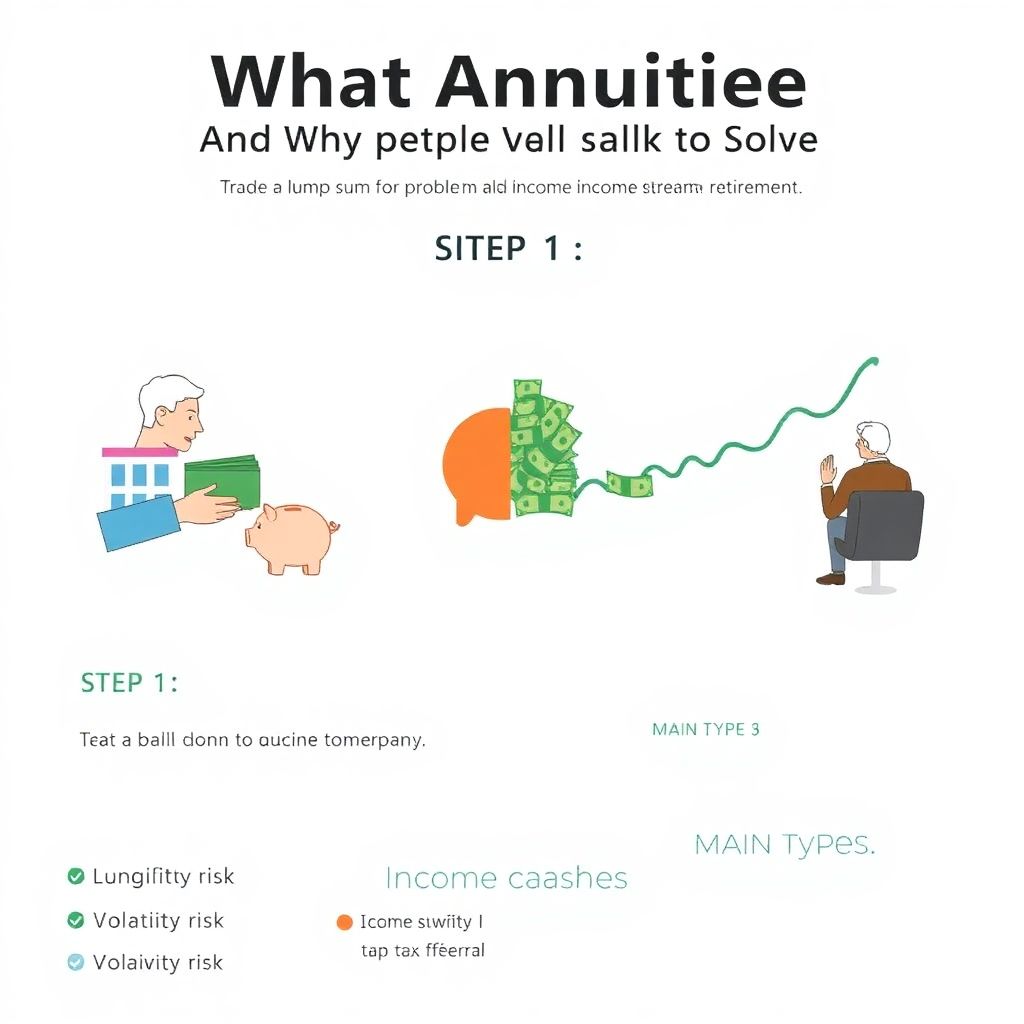
What Annuities Are And Why People Talk About Them
An annuity is basically a contract where you hand money to an insurance company, and in return they promise to pay you a stream of income later. Think of it as swapping a pile of cash for a private pension you design yourself. Unlike just holding mutual funds, here you are trading some flexibility for stability and predictability. That is why people looking for the best annuity rates for retirement usually compare options not only by yield, but also by how much risk and control they are willing to give up in exchange for steady cash flow over the long term.
Step 1: Decide What Problem You Want The Annuity To Solve
Before you even look at products, you need to define the problem. Are you afraid of outliving your savings, or more worried about market crashes? If your main fear is longevity risk, then buying an annuity for guaranteed income can make sense, because it converts capital into a lifelong paycheck. If your anxiety is volatility, you might lean toward structures that smooth returns without fully locking money away. Clarifying whether you want pure income insurance, growth with some downside protection, or just tax deferral will narrow the field dramatically and save you from a messy, confusing search later.
Step 2: Understand The Main Types Of Annuities
At a high level, the market offers three classic models: fixed, variable and indexed. A fixed contract credits a defined interest rate and behaves a bit like a long‑term certificate of deposit, just issued by an insurer. A variable annuity invests in underlying funds, so your account rises and falls with the markets. Indexed formats sit in between, linking returns to an index but with floors and caps. The core trade‑off is simple: more predictability usually means lower upside, while more growth potential means taking on additional investment and fee complexity.
Fixed Annuities: The Straightforward Option
A fixed annuity is the most mechanical product: you lock in a rate for a set term and the insurer bears the investment risk. This suits people who prefer a bond‑like instrument and can live with modest, stable returns. They can be structured to start paying income now or convert to payouts later. The main upside is simplicity; the main downside is that inflation and interest‑rate changes may erode real value over time. When people search for immediate annuity quotes online, they are often looking at fixed arrangements that start paying within a year of purchase.
Variable Annuities: More Growth, More Moving Parts
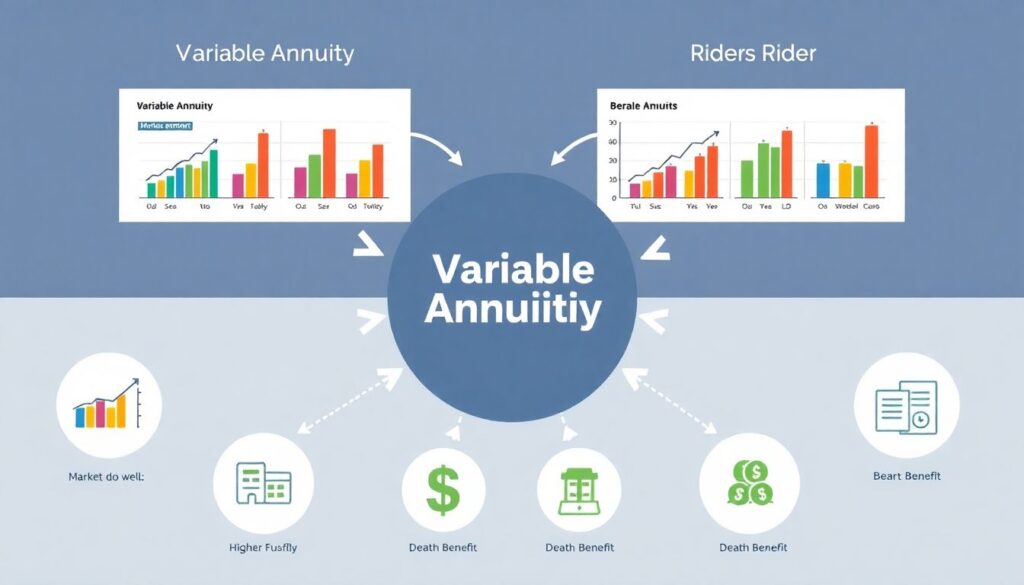
Variable annuities allocate your money to subaccounts that resemble mutual funds. If markets do well, you may see much higher returns; if they do poorly, your account can shrink. To compensate, insurers sell riders promising minimum income or death benefits, but each rider adds cost. So the big question, fixed vs variable annuity which is better, depends on your tolerance for volatility and your willingness to pay for guarantees. If you enjoy managing portfolios and can stomach drawdowns, a variable structure might suit you; if not, the complexity can outweigh the theoretical upside.
Indexed Annuities: Middle‑Ground Or Marketing Trick?
Indexed annuities credit interest tied to something like the S&P 500, but they use formulas with participation rates, caps and spreads. In practice, you get some equity‑linked growth when markets are calm, but you usually give up big upside years in exchange for downside protection. The debate here is whether this compromise really beats a blend of simple bonds and stocks in a regular account. For some conservative investors, the psychological comfort of never seeing negative credited interest is valuable; others find that the opaque mechanics and surrender schedules are not worth the trade.
Step 3: Choose Between Immediate And Deferred Income
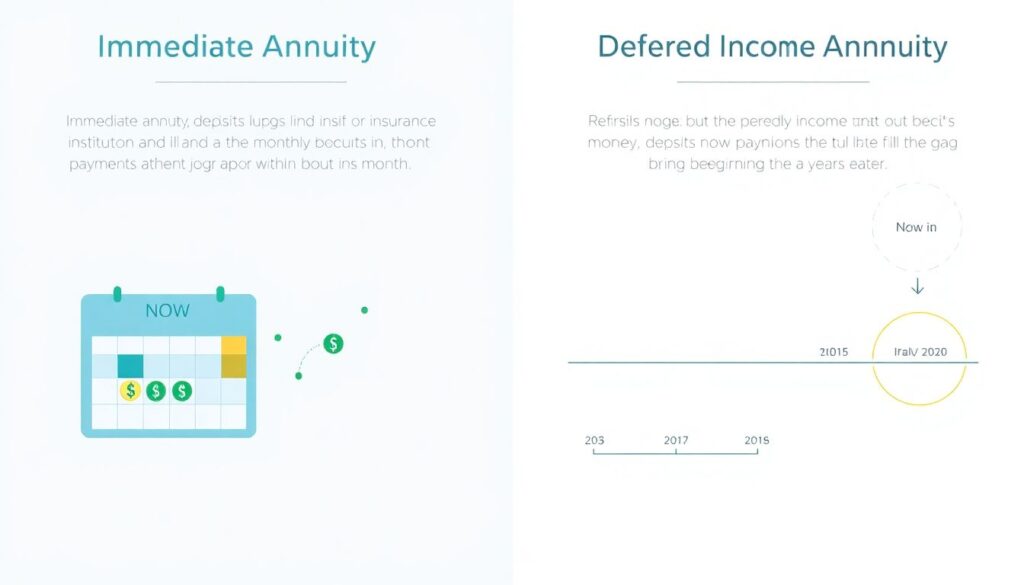
With an immediate annuity, you deposit a lump sum and payments start almost right away, often within a month. This is like buying a personal pension that begins now, ideal for filling a gap the day you retire. Deferred income annuities push payments into the future; you lock in a benefit now that starts years later, sometimes at age eighty or beyond. The trade‑off is liquidity: once you commit, that capital is typically illiquid. If you expect other assets or work income to cover near‑term needs, deferring payments can deliver a higher eventual payout per dollar invested.
Step‑By‑Step: Designing An Income Ladder
One practical approach is to stagger several smaller contracts over time, rather than dumping everything into one purchase. For instance, you might buy a modest immediate annuity to cover basics today, then schedule a deferred annuity to kick in when you hit seventy. This laddered method spreads interest‑rate timing risk and reduces the regret that stems from going “all in” on one date and one product. It also leaves some capital outside annuities, preserving flexibility for emergencies or opportunistic investments while still creating a core floor of predictable income.
Step 4: Compare Providers, Not Just Products

Annuities are only as secure as the insurance company backing them, so how to choose the right annuity provider is critical. Look at financial strength ratings from agencies, the firm’s history of honouring guarantees, and how transparently they disclose fees and surrender terms. Two contracts can look similar on the surface but come from insurers with very different solvency profiles. Also compare how responsive their service teams are, because you may be dealing with beneficiary updates, address changes or tax forms for decades. Chasing a slightly higher rate from a weak carrier is rarely worth the counterparty risk.
Newbie Tip: Use Online Quotes As A Starting Point Only
Digital tools are useful, but they are not a substitute for due diligence. When you see shiny immediate annuity quotes online, treat them as rough indications, not final offers. The actual contractual terms, state‑level rules, and your health profile can change pricing and options. Cross‑check at least a few providers, then have a human advisor or fee‑only planner help you interpret the fine print. The goal is to blend the convenience of online comparison with the deeper, qualitative evaluation that algorithms still cannot handle, especially around riders, tax angles and survivor benefits.
Step 5: Watch Out For Common Mistakes And Traps
New buyers often fixate on the headline payout and forget about inflation. Locking in a nominal payment for life can feel safe, but if prices double over twenty years, that income may cover far less. Others underestimate surrender charges, only realizing later that they cannot access funds without heavy penalties. There is also the temptation to overpay for riders you do not truly need. A disciplined process means stress‑testing scenarios: what if you die early, need long‑term care, or rates rise sharply? If the product fails under several plausible paths, reconsider the purchase.
Fees, Riders And Sales Pressure: Red Flags To Notice
Many annuities pay generous commissions to salespeople, which can skew recommendations. Be wary if someone insists a complex variable contract is the only smart move, yet cannot explain each rider in plain language. Ask for a clear breakdown of mortality and expense charges, administrative fees, and underlying fund costs. High cumulative expenses can severely drag on returns, especially in market‑linked formats. When a proposal sounds like a Swiss Army knife that solves every problem at once, that is a signal to slow down, request illustrations of worst‑case outcomes, and maybe seek a second, independent opinion.
Step 6: Compare Annuities To Other Retirement Income Strategies
Annuities are not the only way to turn savings into cash flow. You can also build a bond ladder, follow a systematic withdrawal rule from a diversified portfolio, or combine part‑time work with flexible spending. The advantage of annuities is mortality credit: those who die earlier effectively subsidize those who live longer, which a regular portfolio cannot replicate. The downside is loss of liquidity and potential bequest value. A balanced strategy often mixes approaches, using annuities to cover essential expenses while leaving growth assets to handle discretionary spending, healthcare shocks and legacy goals.
Which Approach Fits Different Personalities?
If you crave certainty and hate monitoring markets, heavier use of lifetime annuities can be psychologically and practically efficient. If you are comfortable with market risk and value control, you might prefer a leaner annuity layer and a larger investment portfolio. Couples with big pensions may not need much additional guaranteed income at all. Single retirees without family safety nets, by contrast, often benefit more from pooling longevity risk. Think of it less as finding one perfect solution and more as matching the blend of guarantees, flexibility and growth potential to your temperament and life circumstances.
Step 7: Timing Your Purchase And Negotiating Rates
Rates on new contracts move with interest‑rate markets and insurer pricing. When yields are low, payouts from new immediate annuities are usually less attractive; when yields rise, new buyers generally get better deals. You cannot predict markets, but you can avoid rushing in after a big rally or panic‑buying during a scare. Spreading purchases over several years can average out timing risk. Also, compare multiple offers; insurers compete, and you might secure meaningfully better lifetime income by shopping around. A small difference in the quoted rate today compounds into a large variance in total cash received over decades.
Putting It All Together As A Beginner
For most newcomers, a sensible sequence is: clarify your income gap, decide what share of expenses must be guaranteed, research basic fixed and immediate options first, then layer on more complex structures only if there is a clear, quantified benefit. Keep enough liquid cash and short‑term assets for emergencies, and avoid locking in so much that you feel trapped. Treat annuities as one tool in your retirement toolkit, not as the entire plan. Approached thoughtfully, they can complement investments and help turn savings into a stable, durable stream of income for the rest of your life.