
Why Healthcare Needs a Budget of Its Own

Most people treat medical costs like bad weather: they just hope it won’t be too bad this year. That’s risky. Modern healthcare is a mix of clinical protocols, pricing algorithms, and insurance contracts, and all of that hits your wallet in very specific ways. Budgeting for healthcare is really about turning random, scary bills into something more predictable: a separate “health account” in your life, with its own rules, limits, and tactics. Once you see medical spending as a managed system instead of chaos, it becomes much easier to negotiate, compare health insurance quotes online, and say “no” to services you don’t need without feeling guilty or unprepared.
From Charity Hospitals to Insurance Contracts: A Short History
A century ago, many people paid the doctor directly, in cash or kind, and hospitals were often charity-based. Prices were lower, but so were treatment options, and there was almost no financial risk pooling. With the rise of employer-based insurance in the mid‑20th century, medical costs slowly moved off the kitchen table and into opaque contracts between companies and insurers. That solved some uncertainty but created a new problem: patients stopped seeing prices until the bill arrived. Today, health insurance plans for individuals, gig workers, and freelancers are replacing the old “one job, one plan” model, which means the responsibility for choosing coverage and planning for risk is swinging back to you, the patient.
Core Principles of Personal Healthcare Budgeting
Effective healthcare budgeting rests on a few non‑negotiable principles: risk assessment, cost visibility, and deliberate trade‑offs. First, you quantify your medical risk: chronic diseases, planned surgeries, mental health needs, and family history. Second, you force visibility: you look up deductibles, co‑pays, and network rules instead of ignoring them. Third, you decide where you’re willing to pay more—maybe for broader networks or lower wait times—and where you’re okay with constraints. In practice, this means you don’t just pick a plan because the premium looks lower; you run the numbers on total annual exposure and purposely decide how to reduce out of pocket medical costs without underinsuring yourself.
Health Insurance as a Financial Product, Not Just a Card
Think of insurance as a structured contract that buys you two things: protection from catastrophic bills and discounted access to a network. When you compare health insurance quotes online, you’re essentially evaluating different cost‑sharing formulas: one plan might offer a low premium but a brutal deductible, another the opposite. A rational budgeter converts all these parameters into one question: “In a normal year and in a bad year, how much do I pay?” You can simulate both scenarios using simple spreadsheets or the best budgeting apps for medical expenses, then put aside a monthly amount that covers premiums plus a buffer for co‑pays and prescriptions, treating it like a mandatory bill instead of an afterthought.
Designing a Dedicated Healthcare Budget
A solid healthcare budget separates predictable and unpredictable costs. Predictable: premiums, ongoing medications, routine visits, therapy sessions. Unpredictable: accidents, infections, urgent imaging, surprise specialist referrals. The trick is to transform some of the unpredictable into “semi‑predictable” by building a dedicated health fund. You can keep it in a separate savings account or, where available, a tax‑advantaged HSA or FSA. Each month, you allocate a fixed line item labeled “Health Risk Reserve.” Over time, this pool means an emergency room co‑insurance bill becomes an inconvenient transfer, not a financial crisis that wrecks your entire budget or pushes credit card balances to the ceiling.
Unconventional Tactics to Shrink Medical Bills
Going beyond the usual “use generics and stay in‑network,” there are less obvious strategies. One is “price scouting”: before non‑emergency procedures, you call competing imaging centers or clinics and ask for cash‑pay quotes, even if you’re insured. Sometimes a self‑pay MRI is cheaper than your insured co‑insurance. Another is using telehealth subscription services for minor, recurrent issues; a flat monthly fee can dramatically lower per‑visit cost if you need frequent check‑ins. Some patients even negotiate group discounts through community organizations or churches, mimicking small‑employer bargaining power. When you systematically explore these angles, you can uncover surprisingly affordable healthcare options for low income families that go far beyond standard government programs.
Tech Tools and Automation: Let Software Do the Watching
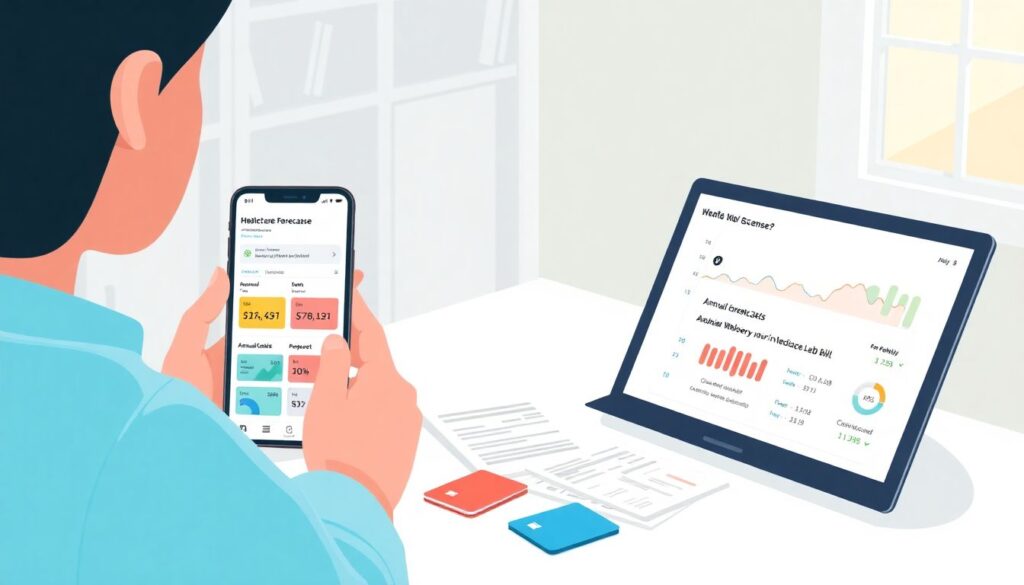
Manually tracking every co‑pay and lab bill is tedious, so offload the grunt work to software. Many of the best budgeting apps for medical expenses let you tag healthcare transactions, forecast annual totals, and get alerts when you’re nearing your deductible. Some banking apps allow you to set a “health” sub‑budget that auto‑caps weekly spending on prescriptions or over‑the‑counter items. You can also create automated transfers into your health savings bucket every payday, aligning them with insurance due dates and typical refill cycles. Done right, your phone and bank are running a quiet, continuous monitoring system that flags anomalies—like a duplicate charge from a clinic—before they silently drain your cash flow.
Real‑World Scenarios: How Patients Implement This
Consider a freelancer with variable income and asthma. Instead of guessing, she calculates last year’s total medical spending, adds in projected premium increases, and then simulates a “bad winter” with more inhalers and urgent visits. Using that, she picks from several health insurance plans for individuals, choosing slightly higher premiums in exchange for a lower deductible and more predictable inhaler costs. She then sets up an automatic monthly transfer that covers the premium plus an average of the variable costs, so even in a heavy‑usage month, she’s pulling from a prepared fund. Over time, this system converts spiky, anxiety‑inducing bills into a stable monthly healthcare “subscription.”
Non‑Standard Solutions for Families on Tight Budgets
For households with limited income, strict optimization becomes essential. One creative strategy is geographic arbitrage within your area: some clinics and pharmacies, even in the same network, have very different negotiated rates. By calling ahead and asking for specific procedure codes, families can route care to cheaper facilities without sacrificing quality. Another tactic is stacking benefits: combining community health centers, manufacturer copay cards, and non‑profit prescription programs with regular insurance. When coordinated correctly, this cocktail can produce affordable healthcare options for low income families that dramatically undercut standard retail prices, especially for chronic medications that might otherwise consume a huge slice of the monthly budget.
Advanced Negotiation: Treat Bills as Drafts, Not Final Verdicts
A surprisingly powerful idea is to treat many medical bills as opening offers. First, you verify each line item: wrong insurance details, miscoded services, or out‑of‑network mistakes are disturbingly common. Then you call the billing department and ask about prompt‑pay discounts, income‑based reductions, or converting the charge to the provider’s self‑pay rate with a lump‑sum payment plan. You can even request an itemized bill and challenge “facility fees” if regulations in your region support that. This approach doesn’t require confrontation; it’s procedural. You’re just applying the same mindset you use to negotiate a rent increase—calm, data‑oriented, and ready to walk away from offers that exceed reasonable benchmarks.
Common Misconceptions That Sabotage Patients
Several myths keep people from building a functional healthcare budget. One is “If I’m healthy now, I don’t need to plan,” which ignores how a single injury can wipe out years of savings. Another is “Lower premium means cheaper overall,” which often backfires when a high‑deductible plan collides with an unplanned surgery. There’s also the belief that insurance prices are fixed, so it’s pointless to compare health insurance quotes online or question bills. In reality, plan design, networks, and hidden discounts vary widely, and patients who regularly shop, question, and negotiate usually pay significantly less over a decade than those who simply accept whatever shows up in the mail.
Step‑by‑Step Plan to Build Your Own Healthcare Budget
1. Gather data from the last 12–24 months: premiums, co‑pays, prescriptions, and any large one‑time bills.
2. Estimate a “normal year” and a “bad year,” then set a target monthly amount that would cover each scenario.
3. Open a dedicated health savings bucket (regular account or tax‑advantaged, if available) and automate transfers.
4. Each open enrollment, systematically compare health insurance quotes online, modeling total annual cost instead of just premiums.
5. Revisit your estimates after every major life event—diagnosis, move, job change—and update the plan so it stays aligned with your real risk profile.
Making Healthcare Just Another Manageable Line in Your Budget
When you strip away the fear factor and treat healthcare as a financial system, it stops being an unmanageable black box. You’re still dealing with uncertain events, but your response is pre‑funded, pre‑planned, and largely automated. Over time, combining classic tactics—like prevention, generic drugs, and in‑network care—with unconventional moves—price scouting, stacked benefits, and bill negotiation—creates a personal safety net that’s surprisingly robust. The goal is not to eliminate every possible medical surprise, but to make sure none of them has the power to derail your overall financial trajectory or force you into desperate, last‑minute decisions.