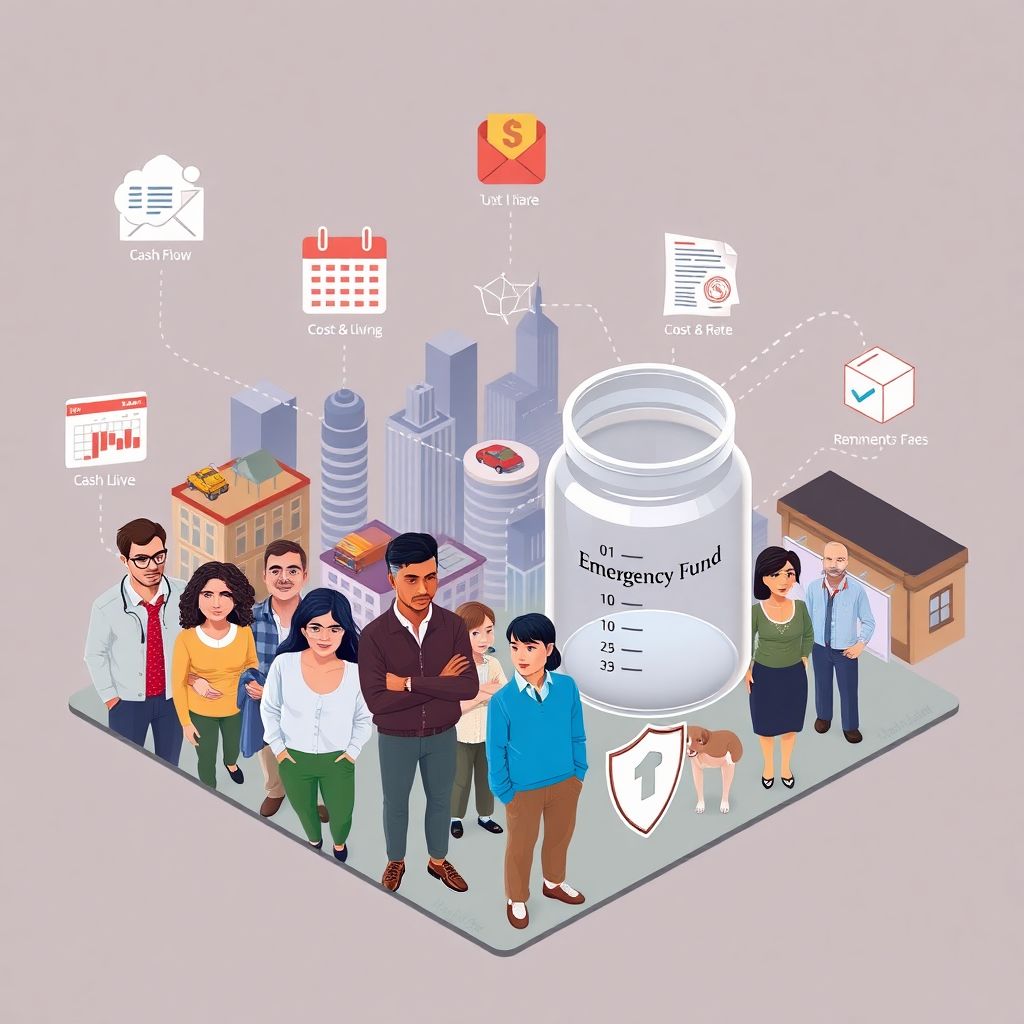
Why Personal Finance Became a Survival Skill for New Immigrants
If you arrived in the U.S. any time in the last few years, you probably noticed something: nobody hands you a clear, practical manual on money. You get forms, visas, maybe an orientation session on compliance, but not on “how not to go broke in a high‑inflation, high‑rate economy.”
Yet by 2025, more than 46 million U.S. residents are foreign‑born (about 13–14% of the population), and immigrants account for roughly one in five workers. That means *personal finance for immigrants in USA* isn’t a niche topic anymore; it’s a major macroeconomic factor that shapes consumer demand, credit markets, and even housing cycles.
From Cash Under the Mattress to Credit Scores: A Quick Historical Detour
Fifty years ago, immigrant money habits in America were mostly cash‑based. In the 1970s–1980s, many newcomers worked in informal labor markets, avoided banks (sometimes because of language or legal‑status fears), and relied on community ROSCAs (“rotating savings” circles) or money orders.
By the 1990s and 2000s, large banks started recognizing immigrants as a strategic growth segment. They rolled out remittance services, bilingual branches, and “starter” checking accounts. At the same time, the FICO score quietly became a gatekeeper for housing, employment checks, and even insurance pricing.
The 2010s brought smartphones and fintech apps. Neobanks began offering app‑only accounts, lower remittance fees, and early direct deposit. But credit scoring systems didn’t keep up with global migration. A doctor from India or an engineer from Nigeria still landed in the U.S. with a *zero* local credit footprint, treated the same as an 18‑year‑old with no history.
Now, in 2025, we’re in a paradox: financial technology is more advanced than ever, but the cost of mistakes is higher because of elevated interest rates, expensive housing, and volatile job markets. That’s why a structured, realistic approach to money is no longer optional.
—
Macro Picture: Why Your Personal Choices Matter at the System Level
Immigrants contribute close to a trillion dollars in spending power annually. Regulators and banks track this very closely because your behavior affects:
– Retail sales and small business formation
– Housing demand in major metro areas
– Credit growth and default rates
By 2030, demographers expect immigrants and their U.S.‑born children to drive the majority of net labor force growth. That means how you handle debt, savings, and investing will influence how lenders design products, how insurers price risk, and how cities plan housing and infrastructure.
So when you think you’re “just opening an account” or “just getting a small credit card,” you’re also feeding data into a large system that is actively modeling immigrant financial behavior and building the next wave of services.
—
Step One: Stabilize Cash Flow Before Chasing Growth
In a new country, your first financial job is not “get rich.” It’s “avoid fragility.” You want to survive temporary shocks: a job change, a medical bill, a rejected work contract.
1. Map Your True Cost of Living (Not Just Rent)
Many newcomers underestimate recurring obligations. Beyond rent and utilities, you face:
– Federal, state, and sometimes city income taxes
– Payroll taxes (Social Security, Medicare)
– Health insurance premiums and deductibles
– Transportation (car payment, insurance, maintenance, or transit passes)
– Immigration‑related legal costs and document renewals
Inflation since 2020 has structurally raised baseline costs. When you design a budget in 2025, assume that essential services (health, rent, childcare) may rise faster than your salary for a few years. Treat your budget as a living document, not a one‑time calculation.
2. Build a Minimalist Emergency Buffer
Emergency funds are a form of “self‑insurance.” For a new immigrant, they have extra value: they reduce the chance that a short‑term income shock forces you into high‑interest debt or pushes you to break immigration‑status rules (like working under‑the‑table against visa conditions).
As a baseline, target one month of core expenses first (rent + food + transportation + minimum debt payments). Then grow toward 3–6 months. In a volatile immigration or work‑visa situation, 6–9 months is safer because job transitions can take longer due to sponsorship rules.
—
Choosing the Right Banking Infrastructure
The bank you pick in your first six months can either reduce friction or create endless small headaches.
Best Bank Accounts for New Immigrants: What Actually Matters

Forget marketing language for a moment. When evaluating the *best bank accounts for new immigrants*, focus on five technical criteria:
1. KYC flexibility: Do they accept foreign passports, ITINs, or consular IDs? This minimizes onboarding friction.
2. Fee structure: Look for no monthly maintenance fees, no or low overdraft fees, and free or low‑cost international transfers.
3. Digital functionality: Solid mobile app, instant alerts, Zelle or equivalent, good fraud‑detection.
4. Branch and ATM network: Especially if you’re paid in cash or deposit money frequently.
5. Integration potential: Ability to connect to budgeting apps, brokerage accounts, and payroll systems.
Neobanks and online‑only options can be great, but check their FDIC or NCUA insurance status, and understand their customer support model. If you’re not fluent in English yet, bilingual support is not a luxury; it’s a risk‑management tool.
—
Credit: The Invisible Currency You Must Start Building
In the U.S. financial system, credit history acts like a parallel resume. It influences your access to apartments, car loans, sometimes even jobs.
The challenge: you arrive with no local data. So you have to deliberately plant and grow that data from scratch.
How to Build Credit Score as a New Immigrant
Think of a credit score as a real‑time rating that depends on five main inputs: payment history, utilization, account age, types of credit, and new inquiries. To optimize that, use a staged approach:
1. Get access to *some* credit line
– Apply for a secured credit card (you deposit cash as collateral).
– If your employer or university has partnerships with banks, use them; they sometimes override thin‑file issues.
– Ask a trusted relative or friend with strong credit to add you as an authorized user on a long‑standing card with low utilization.
2. Use credit strategically, not emotionally
– Set up small, predictable charges (phone bill, subscriptions) on your card.
– Keep utilization under ~30% of the limit; under 10% is ideal.
– Automate full‑balance payments every month.
3. Monitor and correct your file
– Pull free annual credit reports from the three major bureaus.
– Dispute inaccuracies quickly—immigrants sometimes get “mixed files” with people of similar names.
Over 12–24 months of disciplined use, many immigrants move from “no score” to 680–720+. That transition materially lowers borrowing costs and opens access to mortgages, better car loans, and premium cards.
—
Practical Money Management Tips for New Immigrants
You don’t need complex algorithms to manage your money, but you do need structure. The key is turning decisions into systems so you don’t rely on willpower alone.
Five‑Step System You Can Implement This Month
1. Automate basics
Set up automatic transfers on payday: one to savings, one to a “bills” sub‑account. Treat savings as a non‑negotiable line item, not a leftover.
2. Separate “U.S. life” from “home country” money
Keep remittance funds in a distinct sub‑account or at least tag them. This makes trade‑offs visible: “If I send this, what U.S. bill gets delayed?”
3. Standardize recurring costs
Put utilities, phone, and subscriptions on the same card or account. It simplifies tracking and spotting leaks.
4. Use behavioral constraints
If you tend to overspend, keep a low daily spending limit on your debit card and move extra cash to a savings account with a one‑day delay.
5. Schedule a 30‑minute monthly review
Check balances, categorize unusual expenses, and adjust your plan. Over time, you’ll see patterns—seasonal travel, gift spending, tax surprises—and can pre‑fund them.
Over time, these *money management tips for new immigrants* reduce cognitive load and make your finances more predictable, even when your job or visa situation feels uncertain.
—
Taxes, Benefits, and the Hidden Value of Compliance
The U.S. tax system looks chaotic from the outside, but there’s a structure: federal, state, and sometimes local layers, plus social insurance contributions.
Why Filing Correctly Is a Financial Asset
Paying taxes isn’t just an obligation; it’s also data creation. Your filed returns:
– Support future green card or citizenship applications
– Help you qualify for mortgages and business loans
– Establish income history for landlords and grant programs
If you’re on an employer‑sponsored visa, your paystubs and W‑2s become part of your immigration risk profile. Late filings, mismatched names, or under‑reported income can trigger painful questions later.
By 2025, the IRS and state agencies cross‑check more data than ever—bank reports, payroll, and even some gig‑platform records. Working with a competent tax professional who understands immigration categories (resident vs. non‑resident alien status, tax treaties, foreign‑income reporting) is not a luxury; it’s risk management.
—
Planning Beyond Survival: Investing and Long‑Term Goals
Once your cash flow is stable and your credit is moving in the right direction, you can shift from defense to growth.
Financial Planning Services for Immigrants: When to Use Them
Professional planners can be genuinely useful, but the industry is mixed. To decide whether to engage *financial planning services for immigrants*, ask three questions:
1. Complexity: Do you have cross‑border assets, foreign pensions, or large remittances? Complexity justifies expert help.
2. Conflicts of interest: Are they fee‑only (paid by you) or mainly earning commissions on products they sell?
3. Cultural and regulatory literacy: Do they understand your visa category, possible relocation, and obligations in both your origin and host country?
From a macro perspective, the growth of specialized planners for immigrant communities is reshaping wealth‑management markets. Firms that used to ignore smaller “mass‑affluent” clients are creating segmented offerings—bilingual advisors, smaller minimums, digital‑first platforms—because they see lifetime value in serving first‑generation professionals and entrepreneurs.
—
Forecasts: How Your Financial Landscape May Evolve by 2030
Looking a few years ahead helps you avoid short‑term thinking.
Key Trends Likely to Shape Immigrant Finances
1. Alternative credit data
Lenders are experimenting with using rent, utility payments, and even payroll histories to evaluate risk. For new immigrants with thin files, this could shorten the painful early phase of limited access to credit.
2. Regulated digital remittances and wallets
Expect lower fees and faster cross‑border transfers, but also tighter AML/KYC checks. Documentation quality will matter more.
3. Housing affordability crunch
Major immigrant gateway cities may remain expensive or get worse. That increases the importance of early credit building and savings if you aspire to buy property, and makes co‑living or multi‑family arrangements more common.
4. Increased financial surveillance and data sharing
Open banking and broader data‑sharing agreements mean your behavior across platforms will be more integrated. Good news if you’re disciplined; bad news if you rely on “invisible” cash work.
From an industry perspective, these trends push banks and fintechs to design products specifically for mobile, multilingual, internationally mobile clients—exactly the profile of many new immigrants.
—
Immigrants as a Strategic Segment in the Financial Industry
You are not just “a customer;” you are a data point in a rapidly growing segment. Banks, insurers, and fintech startups are running detailed cohort analyses on newcomers: income trajectories, default rates, product adoption patterns.
Economic Aspects and Industry Impact
– Revenue growth: Financial institutions view immigrants as a long‑horizon revenue stream—starting with remittances and basic checking, then moving to credit cards, auto loans, mortgages, and investment products.
– Risk diversification: Immigrant income sources are sometimes uncorrelated with domestic cycles (e.g., remote work for foreign employers), which can diversify bank risk pools.
– Product innovation: We’re already seeing mortgages that accept foreign credit histories, multi‑currency accounts, and bilingual robo‑advisors. Expect more niche offerings, like small‑ticket business credit for immigrant‑owned micro‑enterprises.
By 2035, analysts expect immigrants and their descendants to account for a large share of new household formations and small businesses. That means your financial habits today are actively sculpting tomorrow’s industry norms.
—
Putting It All Together
To keep this practical, here’s a compressed roadmap you can adapt:
1. Stabilize
– Open a low‑fee, insured bank account.
– Build a one‑month emergency buffer.
– Map all recurring obligations, including immigration costs.
2. Formalize
– File taxes correctly from year one.
– Get a secured card or become an authorized user.
– Set up automatic bill payments and savings transfers.
3. Optimize
– Keep credit utilization low and pay in full.
– Review budget monthly and plug recurring leaks.
– Gradually grow the emergency fund to 3–6 months.
4. Grow
– Learn basic investing: index funds, tax‑advantaged accounts where eligible.
– Consider professional advice if you have cross‑border assets or business plans.
5. Strategize Long‑Term
– Align financial decisions with immigration goals (permanent residency, possible return, or multi‑country life).
– Protect against downside risk with appropriate insurance (health, disability, life if dependents rely on you).
—
Final Thoughts: Your Story Becomes the New Baseline

The history of immigrant finance in America has moved from cash envelopes and informal lending circles to mobile apps, algorithmic credit scoring, and complex global portfolios. You’re entering at a time when the tools are powerful but the environment is unforgiving.
If you approach this system with clear priorities—liquidity first, then credit, then growth—you’re not just “learning to survive in a new country.” You’re helping define what competent *personal finance for immigrants in USA* will look like for the next generation.