Why a Job Loss Hits So Hard: A Brief Historical Lens
Losing a job has always been more than just a line on a résumé; it’s a shock to your income, identity, and plans. If you look back a few decades, households often had one breadwinner, a pension, and relatively stable employment. A layoff was rare and usually local. Today, global supply chains, automation, and remote work mean that even strong performers can be cut with a spreadsheet decision made on another continent.
After the 2008 financial crisis, personal finance researchers noticed something important: people with even a modest buffer — three to six months of basic expenses — bounced back faster. They found new work sooner, were less likely to fall into high-interest debt, and reported lower stress. The same patterns showed up again during the COVID-19 layoffs. That’s the backdrop for all the advice you see about how to rebuild savings after job loss: it’s not just a nice-to-have, it’s what separates a temporary setback from a multi‑year financial detour.
The Core Principles of Building a Cushion After a Layoff
The first principle is brutal in its simplicity: stabilize cash flow before chasing growth. When income disappears, your main job is to slow the outflow of money as quickly and intelligently as possible. That’s where smart, rapid financial planning after losing your job comes in — not in a month, but in the first 72 hours.
Second, think in “runway,” not just in dollars. Runway is how many months your current resources can cover essential expenses. A person with $3,000 and $1,000 of bare‑bones monthly costs actually has more security than someone with $10,000 and a $4,000 burn rate. This mental shift makes cutting costs feel like buying time, not deprivation.
Third, separate survival from optimization. In the survival phase, you focus on essentials: housing, utilities, basic food, necessary meds or childcare, and any payments that protect your credit standing. Optimization — tax strategies, investing, career pivots — comes once the bleeding is under control and your new, smaller cash flow is predictable.
First Steps: What Seasoned Financial Planners Recommend
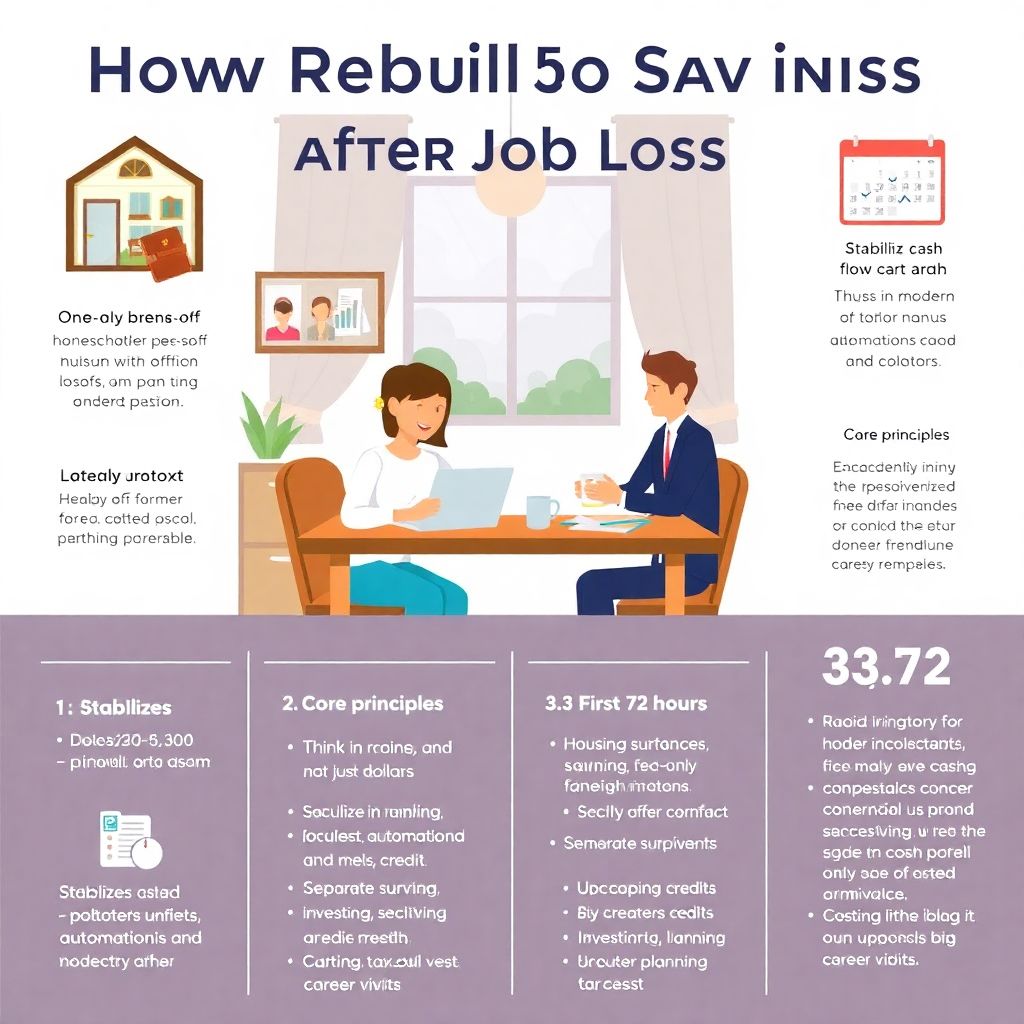
Let’s walk through how experts typically approach the first days after a layoff. Picture a good fee‑only planner sitting at your kitchen table, laptop open, no jargon.
They’ll usually tell you to start with a fast inventory: cash on hand, checking and savings balances, available credit, upcoming big bills, severance details, unemployment benefits, and healthcare options. That inventory isn’t about judgment; it’s about clarity. You can’t design a cushion around blurry numbers.
Then comes triage. A certified financial planner (CFP) will categorize your expenses into three buckets: must‑pay (rent, minimum loan payments, groceries), should‑pay (insurance upgrades, subscriptions that really help you), and can‑pause (gym, streaming, nonessential shopping, many “nice” services). The immediate aim is to carve out as much monthly breathing room as possible without triggering penalties, fees, or serious quality‑of‑life damage.
How to Manage Money and Cut Expenses After Layoff Without Panicking
A useful rule many pros use is the “24‑hour rule for cuts.” You sit down, list every regular expense, and mark potential cuts. Then you wait one day before actually canceling. This pause helps you avoid two extremes: cutting critical protections (like basic insurance) or freezing in place and doing nothing.
On a practical level, here’s how to manage money and cut expenses after layoff in a methodical way rather than through random sacrifice:
1. Freeze lifestyle creep: Anything that got added in good years — extra streaming, premium apps, frequent takeout — is on the table first.
2. Call your providers: Internet, phone, insurance, and even some landlords may offer lower tiers or temporary hardship options if you ask directly and calmly.
3. Re‑shop the expensive stuff: Groceries and insurance are usually the largest flexible categories; switching brands or providers can trim a lot without feeling like you’re living in survival mode.
4. Automate the essentials: Set up automatic minimum payments and core bills so you don’t miss due dates and rack up fees while your mind is elsewhere.
Financial therapists often add one more point: schedule a weekly “money hour.” It’s a calendar event where you update balances, adjust your plan, and send one or two emails or calls about discounts or benefits. That ritual keeps your financial life from becoming a vague source of dread.
Best Ways to Build Emergency Fund While Unemployed
It sounds paradoxical: how are you supposed to build a buffer when your paycheck is gone? Experts emphasize that the best ways to build emergency fund while unemployed are less about “saving” in the traditional sense and more about diverting any irregular inflows into one safe place.
That can include severance payments, tax refunds, side‑gig income, and even the money freed up from expense cuts. Instead of letting that cash get absorbed into day‑to‑day spending, route it immediately into a high‑yield savings account labeled “Runway” or “Cushion.” A behavioral finance trick here is naming the account with your goal; people are measurably less likely to raid a fund that has a clear purpose.
Many planners recommend prioritizing liquidity over return in this phase. That means plain savings over the stock market or tying money up in long‑term products. Your cushion’s job is to be available and predictable, not impressive on a performance chart.
From Zero to Safety Net: How to Rebuild Savings After Job Loss in Steps

Think in stages. You don’t go from no cushion to six months of expenses overnight; you build a ladder.
1. Stage one: Micro‑cushion. Aim for $500–$1,000 in cash as fast as realistically possible. Sell unused items, pause nonessential spending for a month, push for a tax adjustment if over‑withholding, and direct every dollar into that micro‑fund. This doesn’t solve everything, but it stops small emergencies from pushing you into high‑interest debt.
2. Stage two: One month of essentials. Once you’re back to some form of income — a new job or stitched‑together gigs — the next target is to cover one month of bare‑bones living costs. You calculate that from your “must‑pay” list only.
3. Stage three: Three to six months. When income stabilizes, you graduate to classic emergency‑fund goals. At this point, some experts suggest modest automation: a fixed transfer right after each paycheck, even if it’s small, to keep the habit alive.
That’s the practical structure behind the phrase how to rebuild savings after job loss: focus on the next rung, not the entire staircase.
Dealing With Debt: Smart Sequencing Matters
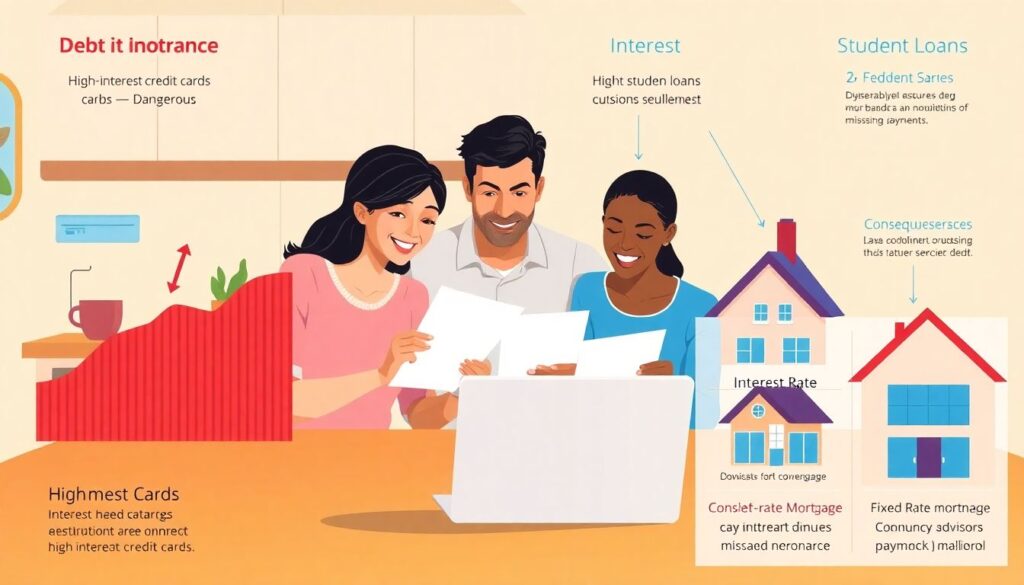
Debt changes the picture, and most households have at least some. Advisors usually look at three things: interest rate, flexibility, and consequences of missing payments. High‑interest credit cards are dangerous because they grow fast, but federally backed student loans or certain mortgages may offer formal hardship programs and forbearance.
This is where debt consolidation and relief options after job loss can play a role — but cautiously. Reputable nonprofit credit counseling agencies can help you build a repayment plan, sometimes negotiating lower rates. A well‑structured consolidation loan can simplify multiple cards into one payment, but only if you don’t then run the cards back up. Meanwhile, “debt relief” outfits that promise to erase what you owe in exchange for big upfront fees are red‑flag territory; experts advise checking any offer against your local consumer protection agency or a trusted counselor.
The key is to avoid silence. Creditors and servicers often have more leeway to help when you reach out early and explain the job loss, rather than waiting until accounts are severely delinquent.
Real‑World Examples of Rebuilding a Cushion
Consider two people who both lose their jobs at the same time. Alex earns a good salary, has a high fixed lifestyle, and keeps only a small checking balance. Jordan earns less but lives modestly and keeps a three‑month emergency fund.
When both are laid off, Alex immediately scrambles: no cash buffer, high rent, and credit cards nearly maxed. Jordan, on the other hand, uses their fund as designed — they cut discretionary spending, file for unemployment the same week, and switch to a cheaper health plan. Jordan’s runway stretches to five months, enough time to make a thoughtful job search rather than taking the first offer out of panic.
A second example: Priya, mid‑career, is laid off without severance. Instead of trying to “keep everything normal,” she and her partner decide on a 90‑day austerity sprint. They sublet their parking spot, pause travel, negotiate lower internet and phone bills, and sell a few high‑value items. The $2,500 they pull together in that sprint becomes the core of their new cushion, and once Priya lands part‑time contract work, they keep living lean until the fund hits three months of expenses.
Common Misconceptions That Slow You Down
One widespread misconception is, “There’s no point saving until I have a stable job again.” Financial coaches hear this constantly. The reality: even tiny amounts — $20 from selling an item, $40 from a bill renegotiation — are valuable because they create psychological momentum and break the “all or nothing” mindset.
Another myth: “Tapping retirement accounts is my first stopgap.” Most experts see that as a last resort. Early withdrawals often trigger taxes and penalties, and they permanently shrink your future cushion. It’s usually better to cut costs harder, seek temporary work, and explore community support before raiding long‑term savings.
Some people also assume that serious financial planning is only for the wealthy, especially in a crisis. In practice, the core tools — tracking, prioritizing, and building a minimal emergency buffer — are exactly the same for a teacher, a software engineer, or a freelancer. What changes are the numbers, not the logic.
Pulling It All Together Into a Sustainable Plan
Building a financial cushion after a job loss is less about one clever trick and more about layering basic, sound moves. First you stabilize: know your numbers, trim spending thoughtfully, and protect your credit standing. Then you lengthen your runway: direct any incoming cash to a clearly labeled emergency account, avoid new high‑interest debt, and use formal hardship programs where appropriate.
Once income returns, don’t rush to “reward” yourself by restoring every old expense. Instead, lock in a portion of your leaner lifestyle and keep feeding that cushion until it truly covers several months of essentials. By then, you’re no longer asking only how to rebuild savings after job loss; you’re designing a system that makes the next disruption — whether personal, economic, or global — far less frightening.