Use any windfall-bonus, tax refund, inheritance, side‑hustle spike-to strengthen your safety net, wipe out costly debt, and buy assets that grow. First protect cash flow, then decide between debt payoff and investing, then automate. Treat it as a one‑time chance to jump several years ahead financially.
Windfall Principles to Deploy Immediately
- Pause: park the money in a boring high‑yield savings account for at least a few weeks before big decisions.
- Protect first: finish or refill your emergency fund before touching investing or lifestyle upgrades.
- Attack bad debt: prioritize high‑interest balances before long‑term investing with this specific money.
- Max out tax‑advantaged accounts before using taxable brokerage or speculative bets.
- Keep lifestyle flat: upgrade skills, systems, and assets, not recurring bills.
- Use clear rules: pre‑decide what percentage goes to safety, debt, investing, and guilt‑free fun.
Assessing Your Windfall: Net Amount, Tax Implications, and Timing
This approach fits someone with regular income, at least basic budgeting habits, and a realistic sense of their risk tolerance. It is especially useful if you are building the best side hustles to make extra money and want every unexpected dollar to move you forward instead of sideways.
Situations where you should wait or get individualized advice before acting include:
- Very large inheritances, legal settlements, or business exits that may trigger complex tax rules.
- Windfalls tied to employer stock, stock options, or restricted stock units with vesting rules.
- Existing issues with the IRS, back child support, or other legal and tax complications.
To understand what you really have to work with:
- Clarify gross vs. net: confirm whether taxes are already withheld (typical for payroll bonuses) or still due (common with inheritances and side‑business sales).
- Ask a tax pro or use reputable software if the amount is life‑changing or tied to investments or a business.
- Choose your timing: if money is already in cash, you can stage decisions over 3-12 months; if it is in investments, decide whether to keep, diversify, or gradually sell.
Short-Term Safety: Building or Replenishing Emergency Liquidity
Before focusing on ways to accelerate financial goals with extra income, lock in short‑term safety so that one bad month does not erase your progress.
What you will need:
- A dedicated high‑yield savings account or money market account, separate from daily spending.
- Online banking access and the ability to set up automatic transfers from your paycheck or main checking account.
- A simple estimate of your core monthly expenses: housing, utilities, groceries, transport, minimum debt payments, and insurance.
How to deploy the windfall for emergency liquidity:
- Set a target number of months of expenses to keep in cash; choose a conservative number if your income is variable or self‑employed.
- Use the windfall to jump directly to that target; if it is not enough, set an automatic monthly top‑up.
- Keep this account for emergencies only: job loss, medical bills, urgent car or home repairs-not vacations or gadgets.
Debt Acceleration vs. Investing: A Simple Decision Framework
-
List all debts with interest rates and minimum payments
Gather credit cards, personal loans, auto loans, student loans, and any buy‑now‑pay‑later balances. Include promotional rates and when they expire so you are not surprised later. -
Sort debts into high‑cost, moderate, and low‑risk
Use broad groupings rather than obsessing over tiny differences:- High‑cost: typically credit cards and personal loans.
- Moderate: many private student loans and some auto loans.
- Low‑risk: most mortgages and some federal student loans.
-
Decide what counts as your personal “guaranteed return” cutoff
A dollar used to pay down debt with a high rate is a risk‑free return equal to that rate. Choose a threshold: for example, decide that anything above your realistic long‑term investment expectation should be paid down first. -
Pay off or down high‑cost debt before investing
Use the windfall to eliminate entire balances in the high‑cost bucket, starting with the smallest or the highest rate-whichever keeps you most motivated.- If you cannot clear them all, knock out as many full accounts as possible, then schedule automatic extra payments on the rest.
- If a promo rate will soon reset much higher, prioritize that loan even if the balance is small.
-
Split between moderate‑rate debt and investing
Once high‑cost debt is gone, consider a split: some of the windfall toward extra payments on moderate‑rate loans, and some toward investing in tax‑advantaged accounts.- Favor extra debt payments if you strongly value certainty or expect unstable income.
- Favor investing if you have stable income, good savings habits, and already built an emergency fund.
-
Keep making at least minimums on low‑risk, long‑term loans
For many people, it is reasonable to keep low‑risk mortgage or certain student loan payments as scheduled while focusing the windfall on higher‑impact uses like retirement accounts and targeted investments. -
Re‑aim your new cash flow after debt falls
When a loan is paid off, immediately redirect the freed‑up monthly payment into investing or further debt payoff so progress snowballs instead of evaporating into lifestyle upgrades.
Быстрый режим: Fast-Track Windfall Plan
- Move the windfall to a separate high‑yield savings account and wait at least a couple of weeks before major choices.
- Top your emergency fund to your chosen number of months of expenses.
- Use the windfall to clear all high‑cost debt balances; set automatic extra payments on remaining loans.
- Max out available retirement and tax‑advantaged accounts; then invest any leftover in a simple diversified portfolio.
- Pre‑decide a small, fixed amount for guilt‑free fun and keep all new recurring expenses off‑limits.
Maximizing Tax-Advantaged Accounts and Retirement Top-Ups

Once safety and high‑cost debt are addressed, focus on how to invest a windfall wisely through accounts that give you tax advantages and long‑term growth.
Use this checklist to review your setup:
- You know whether your employer offers a 401(k), 403(b), or similar plan and what the match formula is.
- You are contributing at least enough from your regular income to capture the full employer match.
- You have checked whether your plan allows one‑time lump‑sum contributions or only changes to payroll deferrals.
- You are familiar with individual retirement account options and whether you are eligible based on income and job coverage.
- You understand basic differences between traditional (tax deduction now, taxed later) and Roth (taxed now, tax‑free later) contributions.
- You have considered health‑savings‑account contributions if you use a qualifying high‑deductible health plan.
- You have a simple, diversified investment choice pre‑selected for new contributions, such as a low‑cost index fund or target‑date fund.
- You have a written order of operations for the windfall: emergency fund, high‑cost debt, employer match, other retirement accounts, then taxable investing.
- You can explain to yourself how new contributions will be invested and when you might rebalance.
High-Impact One-Time Uses: Home, Education, and Seed Capital
After core financial foundations, many people use windfalls and income from high paying side jobs you can start today to fund bigger moves: housing, education, or a small business. These can be powerful, but common mistakes dilute their impact.
- Using the entire windfall as a home down payment and leaving nothing for closing costs, moving, or repairs.
- Buying “as much house as the bank will allow” instead of what fits comfortably into your long‑term budget.
- Paying for expensive degrees without confirming job outcomes, starting salaries, or whether the credential is truly required.
- Funding other people’s education or business ideas before stabilizing your own finances and protections like insurance.
- Putting all the money into a single business idea without a written plan, clear spending limits, or a defined test period.
- Mixing personal and business finances, which makes it hard to know if the venture is actually profitable.
- Spending on logos, websites, or equipment before validating whether anyone will pay for the product or service.
- Neglecting cash reserves, assuming the new business or credential will quickly replace your current income.
- Ignoring simpler, leaner experiments like freelancing, consulting, or online products before committing large amounts.
Behavioral Guardrails: Preventing Lifestyle Creep and Locking Wins
Behavioral guardrails matter just as much as technique, especially if you are stacking the best side hustles to make extra money on top of your main job. Consistent extra income and sudden windfalls both tempt lifestyle creep.
- Automatic wealth‑building first: route a chosen percentage of every bonus, side‑hustle payment, and raise straight to savings and investing before it hits your everyday checking account.
- Hard “no” on new fixed bills: avoid adding new recurring subscriptions, car payments, or housing costs with windfall money; prefer one‑time upgrades or investments in skills and tools.
- Side‑hustle to asset pipeline: treat high paying side jobs you can start today and other gigs as a temporary sprint that funds assets-debt payoff, index funds, or seed money for a more scalable business.
- Pre‑planned fun allocation: decide in advance what small slice of every windfall can be spent guilt‑free so you enjoy the money without derailing how to use bonus or inheritance to pay off debt and invest.
Concise Answers to Common Windfall Scenarios
How should I split a windfall between debts, savings, and investing?
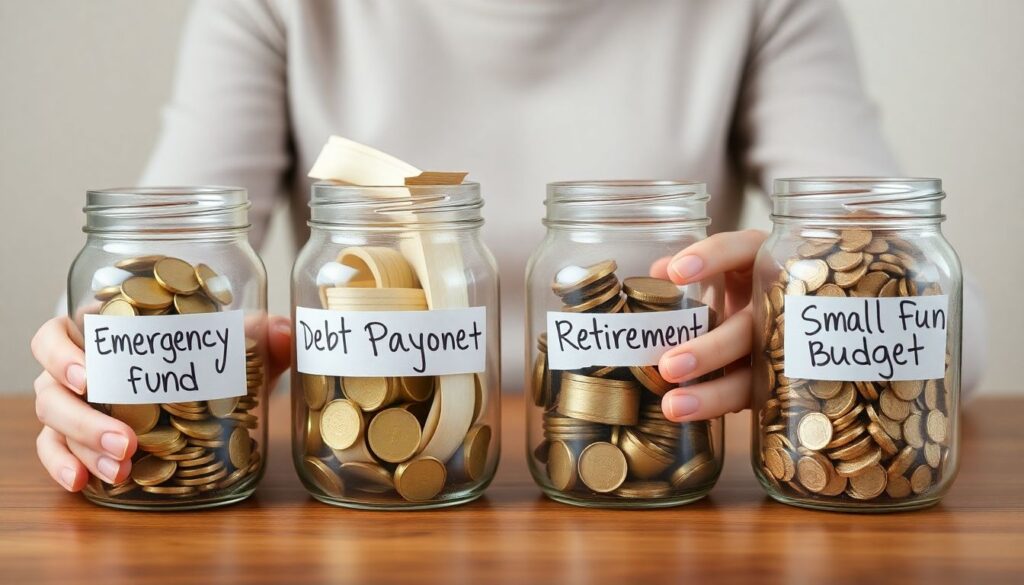
First finish your emergency fund, then clear high‑cost debts, then use remaining money for retirement and other investments. Decide your percentages in advance-for example, a base share to safety and debt, and the rest to long‑term assets and a modest fun slice.
What if I already have savings but still carry credit card debt?
If your savings are above your emergency target, it is usually safer to use a windfall to eliminate credit card balances. This locks in a risk‑free return and simplifies your cash flow, then you can rebuild savings with future income.
Is it ever okay to invest before paying off all my loans?
Yes, especially with low‑risk, long‑term loans. Many people invest while keeping a mortgage or certain student loans as scheduled, focusing extra payments and windfalls on higher‑rate debt first.
How can side hustles and windfalls work together for faster progress?
Treat ongoing side‑hustle money as fuel for consistent extra payments and contributions, while windfalls handle one‑time leaps like wiping out a balance or maxing a retirement account. This combination compresses your timeline to key financial milestones.
What is the safest way to start investing a windfall?
Keep the money in cash while you confirm your emergency fund, debt plan, and tax‑advantaged account options. Then use a simple, diversified strategy such as broad index funds rather than complex or speculative investments you do not fully understand.
How much of a windfall can I spend on myself without guilt?

Pick a clear, modest slice upfront so you do not negotiate with yourself later. Many people choose a small fraction for experiences or upgrades that truly matter, while the rest goes to safety, debt payoff, and long‑term investing.
What if I am expecting several smaller windfalls instead of one big one?
Use the same rules: direct every bonus, tax refund, and irregular payment according to a fixed plan. For example, always send a baseline share to debt or investing, and a small piece to flexible fun so the plan remains sustainable.